Showing posts with label Russia. Show all posts

Saturday, June 7, 2014

What is Russian?


Hey everyone! I’m writing from the road here, as I’ve just begun ‘traveling my way home,’ which basically means I’m homeless until July when I finally make it back to the States. I prepared this entry about a month ago, so that I could post it quickly while on the road, but I wanted to wait until I officially left Russia. I had a whirlwind past three weeks between my Mankato friend Lauren visiting for a week, then Mom and Brent visiting for the following week, all while I finished classes for the semester, said goodbye, and left Moscow for good. So, I’ve barely had time to reminisce, but I’m sure once I’m on my own again next week I’ll turn some of my thoughts back to Russia.

Moscow was good to me. It took me in when I was craving stability and steadiness in my life, and it gave me a wonderful job and lifestyle that I needed. I still believe I was one of the luckiest teachers of all in my orientation group, as I was placed in a school with phenomenal teachers, coworkers, and students (most of them), a great apartment with everything I could possibly need close by, and a convenient location in one of the largest capital cities in the world.

At school, the support and encouragement I received from the Russian teachers was overwhelming, and I truly looked forward to each day of work. I enjoyed preparing lessons for my students, and when I was in the classroom I forgot about everything else except for how to make the class the best it could be. My students accepted me, respected me (most of them), and entertained me to no end. I learned so much from them, about their daily lives, their modern values, their views of the world around them, and most importantly, what it means to be Russian.

So, what exactly does ‘being Russian’ mean? This is a question that most have a hard time grappling, a question that has been echoing especially since the fall of the Soviet Union, and especially now with the recent political developments in Ukraine. Without communism, without a dictatorial leader, without Soviet propaganda, what exactly is the Russian identity? Of course, Russia is an immense country, and this question can be answered a million different ways. But I’ll tell you what my opinion is, based on the past eight months of observations, research, and experience in this intriguingly complex city.

What is Russian?

Walking.

Without fail, whenever I asked my kids what they did or what they were planning to do for the weekend, one of them would say “go for a walk with my friends.” This wasn’t some sort of translation error, this is actually what they meant. In Russian there is a specific verb for this act: to walk together as a social outing. It’s synonymous with our ‘hanging out,’ though they do in fact mean they will go for a walk, with their friends. It’s a chance to get out the house, get some exercise, and socialize, and it’s the Russian national pasttime. Moscow’s numerous parks and broad sidewalks lined with benches make this possible in nearly every neighborhood. Without fail, out on my errands, I will always see people out and about enjoying a stroll (except in the nasty winter) with their family or friends, usually arm in arm.

Family.

Russians spend most weekends with their families, whether it is at their country house, celebrating a family member’s birthday, or visiting relatives. Young unmarried Russians typically live at home until they are married, and they have a very close knit nuclear family, often with a live-in grandma or grandpa to take care of the kids while the parents are working.

Country Houses.

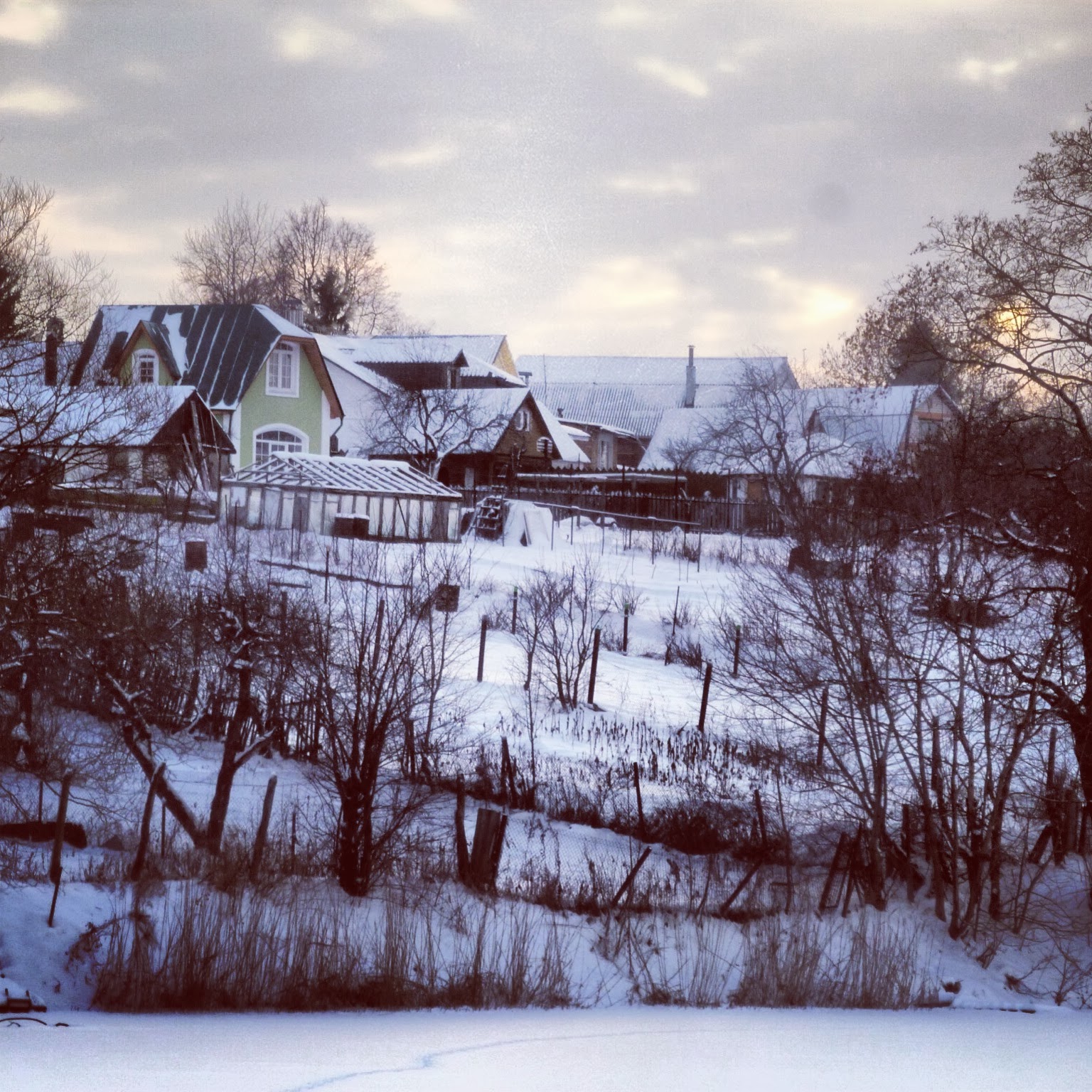
Besides walking, another common response to my weekly ‘weekend question’ is “went to the dacha with my family.” What is a dacha? Directly translated, it means ‘country house,’ and most true Muscovites will own one within an hour or two of the city limits. The dacha has been a staple of Russian life for many centuries, and is still very present in modern Russia. The ‘country house’ is usually just a typical house, nothing extravagant or fancy, but the point is that it’s a house. Not in the city, not in the midst of overwhelming traffic, not in an apartment building. It’s a family house with full bedrooms, a garden, and usually plots of land or forests to be able to wander in and enjoy nature outside of Moscow. Sometimes the family grandparent or grandparents will live at the dacha year round and keep up maintenance, some families go to the dacha continually throughout the year, or others keep it shut up during the winter, then return for the spring, summer, and early fall. A weekend at the dacha is a time to relax, be with family, and to enjoy the outdoors. Most of my kids try to get away without doing their homework by saying the internet doesn’t work at the dacha – in most cases this isn’t true (I always wonder if they really think they are fooling me), but in some cases it is, due to the isolation and seclusion of the houses. Most are located in little villages, as part of a regular neighborhood, much like we are used to in typical American towns. There needs to be a central grocery store and usually a train or bus station nearby, but other than that, a weekend at the dacha is all about the home. 

Also, on a side note, in most dachas there is a banya, our equivalent of a sauna, which is the desire of nearly every Russian to own. The sauna culture didn’t really hit the US, but to Russians, nothing is better than a full blast of a hot, dry steam sweat session in the winter, best complemented with a roll in the snow or a blast of icy air when you are finished. Many of my students talk about the banyas their fathers have built or desire building to complete their country house. You can go to a banya in Moscow, but the true banya is out in the forest, where you can use birch leaves to lightly slap on your skin in order to improve circulation.

Russians on wheels.

Come spring, out for a lovely weather walk, you will find yourself passed by multitudes of people on wheels, whether they are on wheeled shoes (mostly young boys like my students, from my observation), skateboards, bicycles, or rollerblades. If you care to join these fast moving people there are many stalls in the public parks which rent out various wheeled apparatus for your zipping pleasure. Moscow has also recently introduced the shared city bike program, where you can use a bank card to rent and return bikes throughout the city. It’s not much to comment on, but just be prepared for your visit to a Russian park in warm weather. You will be passed.

Fashionable.

Headscarves. High heels. Tall leather boots. Designer bags. You name it, Russian women look like a million bucks, no matter where they are and what they are doing. Even at the gym, as I witnessed firsthand many mornings this winter. Speaking of winter, let me zero in on a particularly Russian look: the fur coat.
As cold weather started approaching, I remember one of my co-teachers, Lena, stating that “a sign of a good husband is when he buys his wife a fur coat,” as she proudly showed her new birthday present off. Based on this sentiment, there must be a lot of outstanding husbands in Moscow, for in the cold winter months nearly everywhere I turned I saw fur coats. Unless you are a fur coat expert like I now pride myself to be, you must realize that once you get over the initial novelty of the coats, some of them are downright ugly. Make sure you cast a critical eye and only stare at the ones worth staring at. There are short fur coats for the fall and warmer temps, and long fur coats for the desolate winter months. There are sparkly fur coats, striped fur coats, and colored fur coats.

You must also have a matching fur hat or appropriate accessorizing headwear such as a Russian scarf to complement your fur coat, or the ensemble isn’t worth a glance.

Generous to no end.

If you are ever invited to a Russian birthday party, go. Don’t ask questions, don’t take time to think about it, just go. You will be spoiled, treated well, have tons of fun, and not be allowed to pay for anything. The Russian mentality is: if I treat everyone for my birthday, everyone will have the most fun possible. They don’t think in terms of being treated back, they just want to opportunity to show their appreciation and to create the best party ever. But of course, if each friend hosts their own party, things are evened out thoughout the year.

For each birthday at the office, we were treated to either pizza, a spread of cold cuts, cheese, and bread, fruit, some drinks, and a dessert. It was delightful to walk into the teacher’s room and realize it was somebody’s birthday. Or to realize there was a holiday coming up because you received a present from one of your students. Or be treated with a small gift because someone went out of town and brought you back a present. In short, Russians are incredibly generous.

Kids will be Kids.

“What did you do last weekend?”
“Sleep. Nothing. Eat. Computer games. Homework.”
“What do you want to do this weekend?”
“Sleep. Nothing. Computer games. Walk with my friends. Find a girlfriend.” (Unfortunately, this kid had been saying that last bit every Friday since Valentine’s Day, with no luck yet.)
What country would you expect these responses from? If you guessed South Korea, Russia, or the United States, you would all be correct. The point is, kids are the same all over the world.


The world is an oyster.

My students study English. They learn it at their public schools, then they come and learn some more at our school. But for most of them, it doesn’t stop there. They choose to learn French, German, Spanish, Italian and I even have a few kids who study Portuguese. One is interested in Korean, and I’m sure some of them have or will attack Chinese or Japanese. They listen to English, British, French, German and other music, and watch movies from many different countries. These kids, whose parents were ‘closed off’ from the world when they were young, are now embracing international and global opportunities with a passion. They know more world history than I did at the time I started college, and frequently ask me questions about history, politics, and American culture. Many of them are well traveled, and while its true that my students are probably from more affluent families than the average Russian, I’m still impressed with how well versed about the world they are. When I ask them why they want to study English, their answers vary from a desire to travel to study abroad to international work. I have one student who will be studying in New York this summer and we’ve already made plans to meet up. These kids are going places, literally. I only hope I’ve been able to help teach them more about the world that they are so curious about. Some questions regarding America I’ve received: “Do kids with no friends really have to eat lunch in the bathroom?,” “Does every school have the yelling pretty girls with the uniforms?,” and my personal favorite, “Why do you go to university if all you do is have parties?” Can’t learn everything from the movies, kids.

This is Russia

This, to me, is Russia. It’s not scary, or always cold, or full of bears. It does have a lot of vodka. I won’t deny that. It also has warm, generous, wonderful, intelligent people who are close to their families, understand the importance of working hard and live their lives to the fullest. Every country in this world has its good and bad qualities. I’m not speaking in defense or support of any specific recent political decisions, but I am speaking in general defense of the Russian people. The people aren’t making the decisions in this power play, the government is. When my mom traveled through the Soviet Union in the 1980s, she specifically recalled the Russian people as being some of the kindest people she met throughout her travels. I have no reason to counteract her statement nearly thirty years later: Russian people, at least all the ones I have met, are pretty fantastic. Don’t let the Western media deter your thoughts otherwise.

I’ve been so lucky to experience nine months in this fascinating country. I’ve learned and seen so much more than I could have hoped for.


With that, I’m signing off for a while as I finish my current travels through the Baltic countries, then take off for my travels through Scandinavia, Central Europe, and Israel before I head home. Unfortunately, I’ll only be in Minnesota for a week before heading to New York City to start a short term teaching job. If I miss you for the first round in Minnesota, I’m hoping to be back again in late August or early September! Check in here every so often to see what I’ve been up to, and as always, I’d love to hear from you or try to meet you along the way. Take care and have a lovely end of your spring and beginning of your summer!


Wednesday, May 14, 2014

Russia as it Was.


This past weekend was full of all things Russia, as I celebrated Victory Day on the 9th, then took off for a two day trip to visit some very historical, very important, and very beautiful Russian towns with my friends. It was a great getaway and fitting end to my time in this fascinating country. We’ve experienced beautiful spring weather lately and this weekend was no exception, minus a few hours of clouds and rain here and here. So, what do you get when you combine a national holiday, fantastic weather, good friends, and some traveling? My weekend. Here it is.

Victory Day

May 9th, 1945, marked the Nazi surrender to the Soviet Union, thus ending their involvement in the Second World War. In Russian, the war is known as “The Great Patriotic War,” due to their significant contributions and loss of Soviet lives. It must be mentioned that though it’s true that the Soviets are culpable for committing great atrocities during the war, they must be credited for their enormous war effort and contribution to victory.

Waiting to wave to the veterans, across the street from the Kremlin.
For the Soviet Union, WWII hit hard, from the day Hitler took Stalin by surprise and invaded Russia to the home soil much of the fighting took place on to the siege of St. Petersburg, then known as Leningrad. After the loss of nearly 20 million Russian lives, the war was finally over, and The Soviet Union was left to try and figure itself out post-war. One thing they did figure out was how to celebrate their victory by partying all day.

I made it to the city center around lunchtime, where people were still gathered along the main streets Confused at this, I used my expert eavesdropping and mild Russian interpretation skills to figure out why everyone was still waiting. Though the official Victory Day parade was over, it turned out that after the parade the veterans and military servicemen and women were bused throughout the city on the blocked off roads, so after about twenty minutes there were cheers and flags waving as about two dozen coach buses paraded by, with everyone waving to each other. After this, everyone left the sides of the street and walked around in the beautiful weather, most likely to walk with friends, meet for a picnic meal, or enjoy the festivities at various parks throughout the city.

I met Jen for lunch, then we walked around the Red Square area, stopping to look at the souvenir stalls, listen to music, and just enjoy
being in the lovely holiday weather. There was a bandstand, decorations, and events for children set up outside Red Square. We eventually parked ourselves on the lawn near a pavilion playing live music, where our friends eventually came and joined us for a few hours. Most people were proudly sporting military caps and the orange and black striped Ribbon of St. George, the widely recognized symbol of commemoration for Russia’s participation in World War II. The best part of the afternoon was the collective mix of the sunshine, our friends, and the festive atmosphere.

In the evening, we hopped on the metro and joined the masses heading to Sparrow Hills Observatory, the same place we gathered (though significantly warmer now) for New Year’s Eve, in order to watch the annual fireworks display. In addition to being warmer, this trip to Sparrow Hills was also different because I did not lose my iPod in the snowy forests, so that was great. The view over the city was stunning, and we positioned ourselves to watch the magnificent show before heading home.

Vladimir

The next day I headed to the train station bright and early to meet my friends Jen, Taylor and Suze for a mini tour of the popular Golden Ring historical cities. Located within one to three hours northeast of Moscow, these cities are easy to get to and renowned for their beautiful architecture, traditional crafts, and historical importance.

We had a bit of an adventure on the way to Vladimir which involved getting off a few stops early (on purpose) but then missing the next two forms of transport to get to Vladimir from there (kind of our fault but definitely not on purpose) and having to walk about a mile along a busy Russian highway until we could flag down a bus. We felt it added greatly to the excitement of getting out of the city, and hey, we made it to Vladimir only two hours later than planned.

Vladimir
Vladimir can best be described as a ‘long city along the river,’ with the river forming a natural southern boundary and the city built up along the northern hillside. When it was founded in the early 12th century by Vladimir Monomakh, (clearly a humble dude, naming his town after himself, not to mention crafting a giant diamond studded crown for himself which now resides in the Kremlin Armory Museum) the city held more importance than Moscow until the Mongol invasions of the 13th century.

Vladimir's Golden Gate
We spent the afternoon wandering, enjoying, and photographing. We walked along Avenue Lenina and explored a monastery, some parks, churches, and monuments all along the way to the end of the avenue. Lenina culminated at the Golden Gate, the former entrance to Vladimir on the road from Moscow. Though there were cloudy skies and a threat of rain, the air was still warm and pleasant to walk around in.

Our hostel for the evening had been booked for Suzdal, so after getting our fill of Vladimir, we said goodbye to Suze and Taylor, then Jen and I hopped on the bus for a quick half hour trip. By the time we arrived, it was starting to rain and to get dark, so we wandered a short while down a hill and along the river to find our hostel, then delightfully settled ourselves in the comfortable, cozy beds. We had to drag ourselves back up the hill in the drizzle in order to find some food, but once we did we enjoyed another round of hearty, traditional Russian food.

What is traditional Russian food, you might ask? Even if you don’t ask, I’ll tell you anyway. Russian food is, in a word, hearty. Think meat, potatoes, bread, and an assortment of pickled, stewed, or mayonnaised vegetables, then add some sour cream and some dill to top it off. One of my favorite Russian foods is pelmeni, the Russian version of dumplings. Pelmeni is simply dough, some sort of filling – either meat, potato, or mushroom, typically – which is then boiled and served with sour cream and dill. It’s deliciously flavorful and is one of the best comfort foods for a long, cold winter. Or just because you want some. Blini, the
Google Images: pelmeni and borscht
Lenten pancakes I’ve already talked about, is also a typical food found on most menus, and can be enjoyed with either sweet or savory fillings. Then there’s borscht, the Russian beetroot soup with a tomato and beef stock flavor, with a variety of shredded vegetables – always beetroot - and usually some meat. This is usually eaten with dark brown bread and some (what else?) sour cream. Next, on most menus you can usually find pirogs, which translates to ‘pie’ in English. Pirogs remind me of a smaller version of an Italian calzone, with a meat or vegetable (or sometimes sweet fruit) filling surrounded by bread dough, which is then baked or fried.  Last, there is a variety of Russian salads, which usually involve chopped vegetables and a thick layer of mayonnaise. Not my favorite, but still tasty. The beauty of being outside of Moscow is that these typical Russian foods were much cheaper at restaurants, making them even easier to enjoy. Jen and I slept very well that evening, as I’m sure you can guess.

Suzdal

'What the monks drew!'
The next morning we set about exploring our new locale. Suzdal, founded in the eleventh century and rising to importance as a center of religion due to its numerous churches in medieval times, is now a beautiful little town preserved as an ‘open-air museum.’ This suited us excellently as the open air was wonderfully sunny, so we set about on our walk to explore the town. Our first destination was the 12th century Spaso-Evfimiev Monastery, founded on the outskirts of town, which contained at least five museums, a cathedral, and monastic structures which are no longer in use. Unfortunately, there was not much English to help us out with what we were looking at, so we had to use our limited Russian language skills and our imaginations to fill in the blanks (‘this is what the monks painted all day’, ‘this was the spoon the monks used to eat their borscht’, and ‘this is what the monks wore!’) We were absolutely impressed with some of the beautiful jewels and religious art, but I’m afraid I can’t tell you much more about them other than they were sparkly. It was still worth a look at though, and we especially enjoyed walking around the beautiful grounds of the monastery. One fun fact we did learn, based on my limited understanding of Italian and Jen’s Russian, that during WWII the monastery was one of many POW camps for Italian soldiers. That’s probably not very fun to know, actually, as I can’t imagine the soldiers were treated very well, but it helps put history into perspective and was interesting to learn about.
Spaso-Evfimiev Monastery
Cathedral of the Nativity
After the monastery we were threatened by rain again, so we hurried up our walking tour by heading down the main street (also Avenue Lenina, as in Vladimir) to reach the beautiful Cathedral of the Nativity of the Virgin, first built in 1225 and remaining well preserved to this day. It made the UNESCO Heritage list due to its unique original white limestone architecture, joining the ranks of seven other important monuments in the area. After a walk around and a stop at a well preserved seventeenth century wooden house, the rain finally let loose, so we were forced to finish our trip sitting in a café drinking coffee and people watching.
Suzdal at a glance

Our adventure came to an end with a packed train ride back to the city, (standing room only) during the majority of which I stared out of the window at the green fields and forests. Back in Minnesota, we would call this landscape ‘boring,’ but after living in the city for eight months, it was refreshing to see open air again. That was one of the best parts of the weekend, to be out in a normal town again, with no high rise buildings, eight lane highways, or metros. We were grateful for the opportunity to get out of Moscow for a little while and enjoy the beauty of provincial Russia. If you look on a map, Vladimir appears very close to Moscow even though it’s a substantial three hour train ride away, which puts into perspective just how massive Russia actually is. It’s a shame I didn’t have more time to venture further away from Moscow and see more towns like Vladimir and Suzdal, but this just means I’ll have to come back to Russia in the future, of course.

I hope you all had a wonderful weekend also and are enjoying the lovely spring weather! Take care.

Thursday, April 24, 2014

A Russian Spring


Hello everyone,

I hope you’re finally beginning to enjoy warm temperatures, singing birds, and budding flowers, wherever you are. If you live somewhere warm, you probably don’t understand the magic of springtime like us cold-weather people do. Spring means not having to turn your car on ten minutes before you drive it, not having to shovel the walk every other morning, and not worrying about icy roads. Of course, it also means lots of flooding, melting puddles of dirty ice, and large amounts of rain, but we’ll skip over that for now.

You’ll be pleased to hear that Russia has a spring as well! Our winter was an absolute bust – we didn’t have a White Christmas, then there were about two or three weeks of below-zero temperatures, and...that was it. The weather got progressively warmer, the snow started to melt, all the outdoor ice rinks started to shut down, the ladies stopped wearing their fur coats, and before I knew it, it was spring. My kids and I still strongly believe that the Midwest stole Russia’s winter and added it to their own. But we’ll let bygones be bygones. Though the weather maintained a steady month of hovering just above freezing, it has now finally taken a turn and I believe warmer weather is locked in.
I haven’t written about Russia in a while, not because things haven’t been happening (I'll keep the political issues at bay here, and all you need to know is that things are safe in Moscow), but because I’ve been waiting until Easter so that I could align the six weeks between two important Russian spring holidays.  Which means to start, I’m going to take you back six weeks to the holiday that marked the beginning of the Russian ‘spring’ – in spirit if not in weather.

Maslenitsa

Maslenitsa, one of the most important spring holidays in Russia, traces back to pagan ancestry. The holiday was conveniently adapted to fit with Eastern Orthodox traditions, however, and today it is once again known as the start of Orthodox Lent. It literally translates to ‘Butter Week,’ and represents the final week of winter, a nice excuse to indulge in our extra winter insulation foods (like butter) just to ensure a smooth sailing into spring. In the past, each day of Maslenitsa week was designated for special activities, such as visiting certain members of your family, going for sleigh rides, or skating in the park, with a culmination festival day on Sunday. The traditions ceased during Soviet times, but these days, there is a more of a cultural revival. Today, although Maslenitsa events are growing in popularity throughout the week, most of it focuses on the weekend activities just before Lent.

Maslenitsa blini
I did, however, begin my personal celebration during the week by eating the traditional Maslenitsa food: pancakes, or blini, in Russian. Similar to the Catholic tradition of Shrove Tuesday, pancakes mark the beginning of Lent. The pancakes in description are actually more similar to crepes, and look like very thin, flat versions of my Dad's fluffy pancakes I grew up with. The beauty of these pancakes is that you can eat them with anything – if you want them to be savory you can have butter (hence the name ‘butter week’), caviar (that's a thing here), or some kind of meat and cheese. Alternatively, you can go the sweets route and fill them with jam, sweetened condensed milk, Nutella, or whipped cream. They're even great just plain. Either way, those pancakes disappear like lightning. You could buy messes of them at the stores, at the festival stalls, or make them at home. We had them at school throughout the week, contributed by a variety of school ladies, and I made it a personal mission to embrace the cultural experience by eating a hearty amount. Each time they appeared.

The pancakes, though they very neatly lined up with the Catholic Pancake Tuesday, actually originated with the pagan festival, as they represented the bright, round shape and color of sunshine. The pagans used Maslenitsa to mark the end of winter and the beginning of spring and sunshine. No matter that usually in Russia it was the middle of a cold, snowy winter – tradition is tradition. The final day of celebration is the most exciting and official custom of Maslenitsa: the burning of the female effigy, representing Lady Winter. (In Russian, winter is a feminine noun.)

Lady Winter
If you think this is something not to be missed, you are right. After an unusually warm week, a group of us met up on Sunday afternoon at one of Moscow’s largest parks to enjoy Maslenitsa and watch the burning. Unfortunately, that became the chilliest day of the week, so after ice skating and walking around for a few hours we were freezing, but determined to stick it out until the fire. The park was packed with families milling about, mostly for the kids activities and games, but also just to enjoy the event. There was live music, singing, and dancing in the center stage, and I had fun watching a group of people (most likely due to a certain liquid influence which made them especially happy) dancing and singing in circles to what I assume was traditional music.

Finally, after a cold afternoon of waiting, the burning commenced. We all gathered in a large circle and waited in anticipation. There was some sort of chanting and singing that I can only imagine meant something along the lines of “burn the witch!” and the next thing we knew, she was up in flames. It was all over in a matter of seconds, after which there was cheering and clapping.

Slightly creepy? Definitely. Interesting cultural experience? Absolutely. Though snow still decided to visit us in the following weeks, in everyone’s hearts and minds: winter was over.

Lent

In between Maslenitsa and Easter we had Lent. As in America, in Russia some observe this and some don’t. The Russian Lent starts on a Monday compared to the Roman Catholic Wednesday, and they have stricter rules. In modern daily life, however, it is loosely adhered to. The only difference I noticed around town were the kinds of treats my babushka (yes, my own personal Russian grandmother) served me with coffee after tutoring on Saturdays (I didn't know how to explain to her that I always give up sweets for Lent so I just wrote it off to a cultural experience and avoided chocolate) and the stickers in the grocery stored that marked whether it was ‘Lent approved’ or not.

Thanks to trusty Wikipedia, I learned that in the Eastern Orthodox Church, for those who follow it, Lent is quite strict compared to us lax Lutherans (read more about the differences here.)
“Weekdays during Lent, members are asked to avoid meat, meat products, fish, eggs, dairy, wine and oil. On Good Friday, members are urged not to eat at all.” Therefore all “Lent” products that I saw stickers on in the grocery store were foods made with no eggs, oil, or dairy, mostly in the bakery aisle. I’m happy to report that all of my purchases happened to be Lent approved.  

Tretyakov Gallery
Vodka Museum displays
The Lenten season this year wasn’t marked with anything special other than gray skies, a snowfall or two, and business as usual at work. However, I did make sure to take advantage of my free typically-non-sunny Sundays by visiting some of Moscow’s great delights: museums. I had quite a few on my list but have since been able to check many of them off. I visited the two most famous art galleries in Moscow, along with two history museums and the official Russian Vodka Museum thrown in the mix just for fun. The vodka museum gives you a free shot when you’re finished with the exhibition.


One of the highlights of my city exploration during Lent was one particular, rare sunny day when I ventured out to the Izmaylovo Market, located on the former royal property of the Romanov family. Today, located on the same property there is a large structure known as the 'Izmaylovo Kremlin,' a mess of brightly decorated and elaborate buildings designed to emulate medieval Russian structures. The 'Kremlin' is home to a wedding hall, restaurants, and bars for wedding events, but it also holds the Vodka Museum, an open air museum and theme park for children, and one of the city's largest flea market. Quite the place.

For my unusually sunny Sunday, I decided to walk around the structures to investigate and take pictures, get my morning fix by visiting the vodka museum and taking the free shot (it was 5 o'clock somewhere, I'm sure), then do some shopping for things to take home as gifts this summer. At the market the first few aisles are heavily laden with typical "Russian' tourist products such as the matrioshka dolls (the ones that open and open and open with sets of smaller dolls inside), fur hats, and Russian decorated everything. However, in the back wooden aisles and walkways the clientele is primarily Russian speakers, haggling and bargaining for the best deal at what most would pronounce as "junk." That's the purpose of a flea market though, right? I'm sure there were many treasures among the items displayed, but I chose to do a quick browse and focus on the typical Russian items first, as the weather was deceptively chilly. I'll come back and do some better investigation now that it's warmer out, perhaps for some old Soviet books, stamps, posters, etc.

 To finish out my afternoon before I became an icicle, I walked across the park to the other side of the frozen pond, where kilometers of trail were laid out along the lake and the nearby forest. To view the entire complex from a distance put it into a wonderful perspective, and evoked a strong sense of Russian magnificence. Whether this feeling was due to the vodka shot or the beautiful sunshine I'm not sure, but it was still a lovely sight to behold and enjoy.
Izmayolovo Kremlin
Women’s Day

Some of you may know that March 8th is International Women’s Day. What you may not know is that in Russia…people actually celebrate it. Though preceded by February’s ‘Men’s Day,’ (perhaps just so that men's feelings aren't hurt) Women’s Day appeared to be more public and important to acknowledge. Smart Russia, smart. For Men’s Day, our two male teachers received alcohol and a tie. For the weekdays leading up to Women’s Day, I received chocolates, flowers, and little gift bags of cosmetics and toiletries. But for me the best part of the holiday turned out to be my half an hour walk on March 8th to my Saturday morning tutoring session, when I passed over two dozen men walking on the street carrying flowers. There are always little outdoor flower stalls along the streets throughout the year, but I rarely see more than one or two people carrying flowers on the street. On Women’s Day, however, there were flowers everywhere. It was sweet to think that each man with flowers, no matter how curmudgeonly they appeared, had a soft spot somewhere for his special sweetheart. My girls reported back to me the next week that for Women’s Day most of them had a special meal with their families along with receiving flowers and maybe a small gift from their fathers and brothers. They were shocked when I informed them we don’t really celebrate Women’s Day in America in the same way – we celebrate Mother’s Day. One of my girls asked, to clarify, “So, if a woman isn’t a mother…she doesn’t get celebrated?” I responded by saying that usually we can say Happy Mother’s Day to most women older than us, as a general sentiment, but it did give me something to think about. She had a point – shouldn’t every woman and girl be celebrated?

Cosmonaut Day

 A brief but deserving mention is the final spring holiday before Easter this year, Cosmonautics Day. April 12th, 1961, marked the date of the first man in space, Russian astronaut Yuri Gagarin. At a time of high Cold War tension, this event made him an international celebrity and earned him the title of Hero of the Soviet Union.
April 12th was designated International Cosmonautics Day and still celebrated in Russia today with ceremonies and marches, culminating in the cemetery where Gagarin is buried. Though we didn't see the official celebrations in the city, Jen and I had plans to visit the newly renovated Cosmonautics Museum for the weekend. My students had informed me about the activities at school that week, then recommended the museum. We had problems finding said museum, so by the time we located it and saw the line outside, we decided to just take a walk around the area and enjoy the memorial structures outside. We enjoyed watching Russian families (presumably) educating their children about the statues and murals, hopefully to instill a sense of knowledge and pride in their country's accomplishment.

Easter

Finally, we conclude with Easter. Russia doesn’t celebrate Easter with the Easter bunny, baskets, or egg hunts, but they do have a few traditions of their own. Probably more practical traditions, but hey, we have fun.

Easter Kulich
The week before Easter is the time to buy or make ‘Kulich,’ or Easter bread cake. It’s sweet and has icing like a cake but includes yeast and looks more like bread. It is tradition that families can’t eat their Kulich until they have been to the Easter service and had it blessed by the priest. After church, there is a meal, decorating eggs, and, as my kids have explained to me in great detail, “egg fighting.” I’m sure that’s conjuring up many images in your mind, but what they mean is that after you have hard boiled, decorated, and admired your egg, you are supposed to challenge someone and say your egg is stronger than theirs. Then, it’s a direct hit, egg on egg, with each person holding their egg and putting their might into destroying the other egg. The winner? The person whose egg has cracked the least. Brilliant.

I celebrated my Easter a little differently, though we did decorate eggs and eat Kulich. On Easter, Jen and I went to service at the same church we went to on Christmas, after which we enjoyed a champagne reception with the other members in the sunny garden, then we hopped on the metro and met up with our friends at the banya (technically called a sauna, but it’s a little different than our saunas, so I’ll differentiate). The banya is basically a private bathhouse/sauna/spa where you show up with your swimsuit and towel, some food and drinks to share, and spend three hours relaxing with your friends in between sweating in the sauna, showering off, and soaking in the pool. You could pick your poison and sweat in the Finnish style dry heat sauna or the Turkish style steam room, then recover by plunging into the chilly pool. Traditionally, a roll in the snow would have served the same purpose but we made do with our alternate option of the pool. Needless to say, we all felt very clean, detoxified, and slightly dehydrated when we left.

Pool and common area 
After the banya, we went back to Brendan and Robb’s, our trusty holiday hosts from both Canadian Thanksgiving and Christmas, and had a lovely Easter potluck and a second round of egg decorating. As always, when you are away from home your friends become your family, and Easter this year was no exception. Most of us will be parting ways and moving on at the end of May, so we reflected on the past seven months and talked about how to make the most of our last few weeks together. I’m anticipating the time flying by, and as always will try to appreciate everything to the fullest as the days slip away.

Easter 2014

With that, I hope you all had a wonderful Easter with your family and friends – please enjoy the rest of your April and start anticipating warmer weather and the coming of…dare I say it? Summer.


Sunday, February 2, 2014

History Comes to Life

Hello everyone! I hope you’ve been trying your best to stay warm and keep a positive attitude – you’ve made it through the worst of winter – now just hold on a few more months! You can do it.

I know that most hardcore Midwesterners sometimes have to escape the winter blues by going on a tropical vacation right about now. If you’ve got one coming up – great! We’ll enjoy seeing your sun burnt faces and be jealous of your fruity drinks and palm tree pictures on Facebook. If you don’t have a tropical destination lined up, might I suggest somewhere to go? I’m thinking of a place warmer than where you are now, with a rich cultural history to learn about, warm and delicious comfort food, plenty of vodka to make you feel like you’re on spring break, and the added bonus of seeing a two month old kitten and yours truly? Why yes, I’m talking about coming to Russia. In the winter.

Crazy as that may sound, I actually had the privilege of spending the past few weekends with two brave Midwesterners who did just that. And as they pointed out, it truly was warmer here in Russia than in Minnesota. The day after I returned from Germany, my former UWGB professor and her research assistant landed in Moscow for a two and a half week research trip. I would have never imagined that four years ago, sitting in Professor Sherman’s History of Modern Russia course, I would someday be living in Russia and meeting up with her in Moscow. Funny how the world works. Accompanying her was Natasha, a fellow UWGB history major graduate. They were planning to conduct archaeological research at Moscow State University throughout the week, then spend the weekends sightseeing. I was only to happy to tag along on their excursions, not only for the company but also for the invaluable knowledge Professor Sherman provided, as she has spent most of her adult life studying, teaching, researching, and writing about Russia.

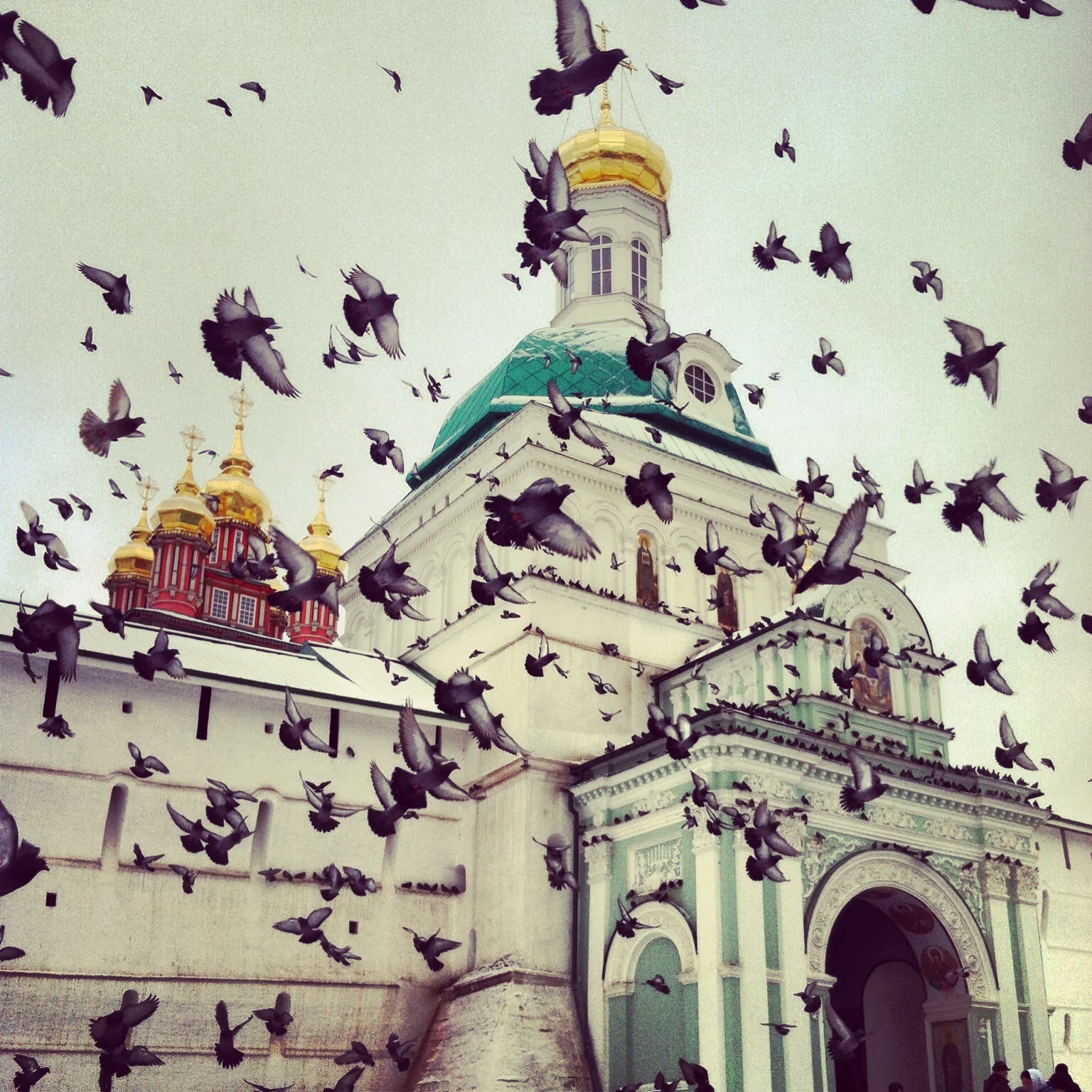
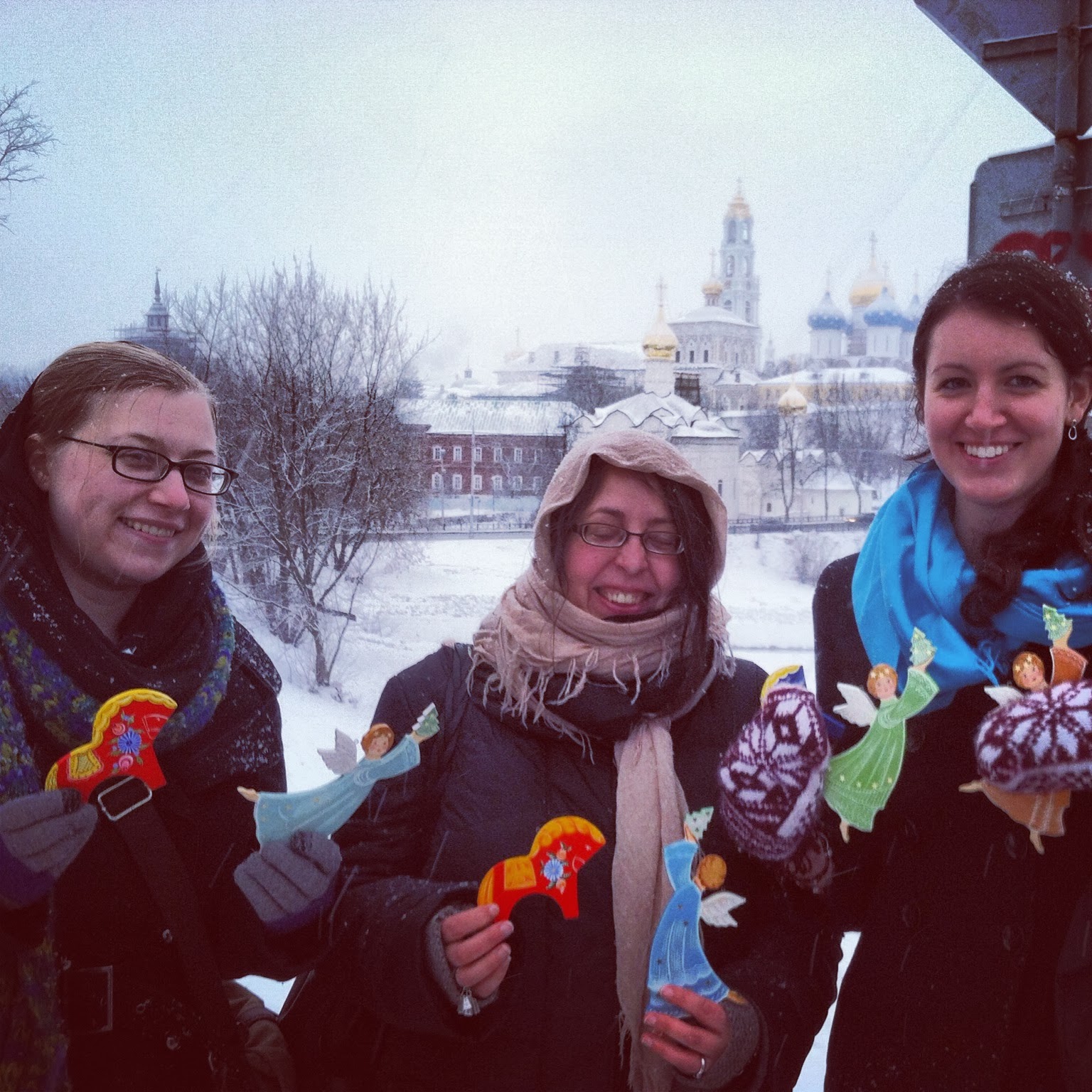
So the three of us history nerds (it’s okay, you can say it) met up for dinner the first weekend they arrived, and made plans to visit a very famous monastery in the town of Sergiev Ploschad the next day. I ended up telling some of my friends about our plans and invited them along. We met up at the train station and boarded the electrichka, or commuter train, the next morning, and rode it to our destination, about an hour outside of Moscow. It was the first time I had ever been outside of a Russian city, and I hadn’t realized how nice it was to see fields, trees, and regular houses again. There was a light snow falling as well, which created the perfect atmosphere for a winter day trip.
The crew in front of the monastery.
Entrance to the monastery. 
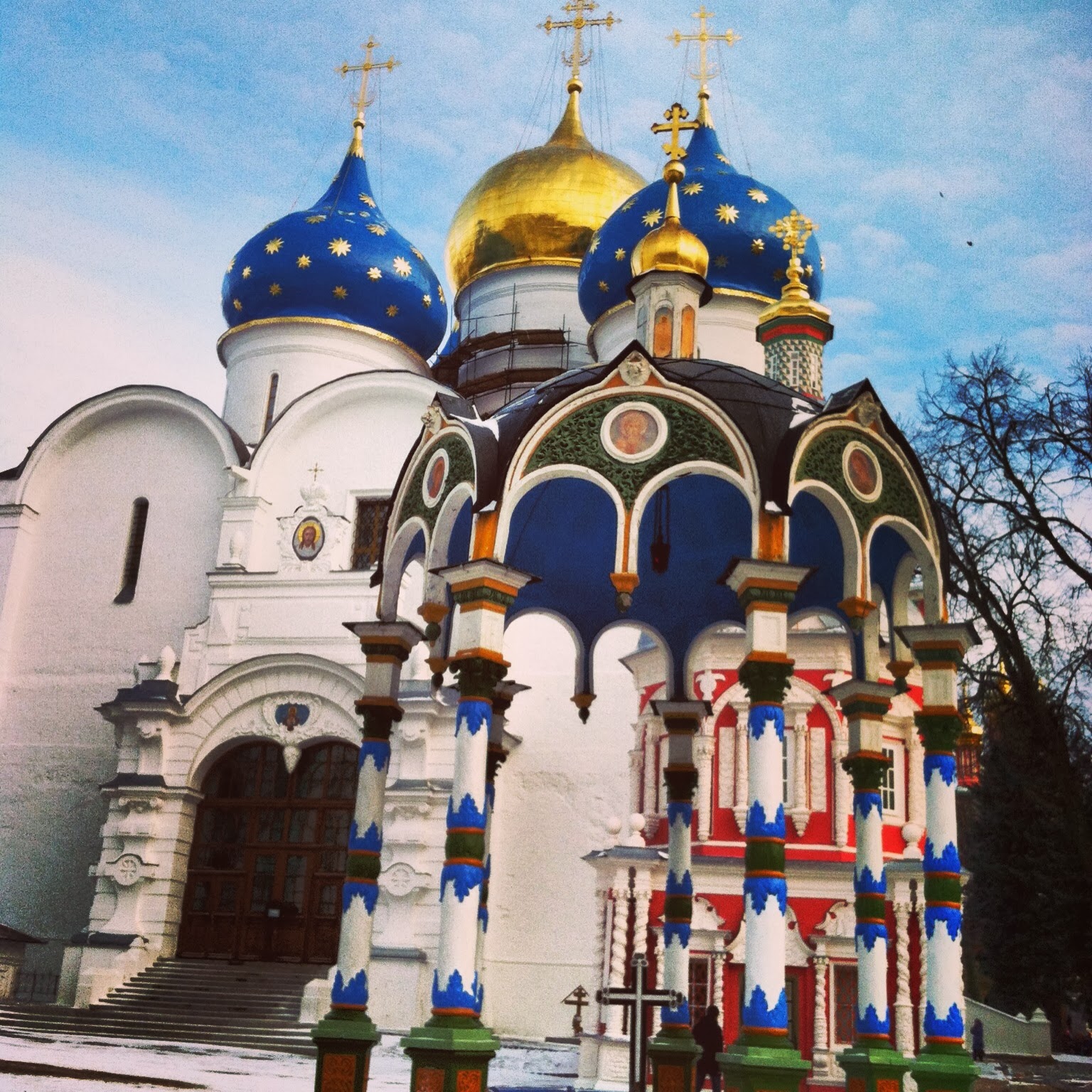
We received a mini history lesson from Professor Sherman on the ride out to the monastery. St. Sergius, the patron saint of Moscow, started out as a humble monk who decided he wanted to retreat into the forest to live out his life in peace. Ironically, though this act marked his holiness and devotion to his God, he was so good at being holy that he unintentionally created a following. People wanted his wisdom and inspiration, which led to them seeking him out in the forest, where he had built a small wooden church dedicated to the Holy Trinity. Eventually his one little church grew to the creation of an enclosed monastery, with many buildings and monks dedicated to Sergius’ followings. In the 14th century, this monastery became “a dynamic center of spiritual teaching and the greatest religious house in the land.” However, despite all his fame and glory, Sergius himself continued to live humbly and simply. After his passing, his remains stayed at the monastery, thus turning it into a pilgrimage site. The monastery has remained one of the holiest places for the Russian Orthodox Church, and even today the importance of St. Sergius’ legacy continues. The day we were there, the line to pray in front of him was out the door and into the cold, but people still waited.
Trinity Sergius Lavra church. 

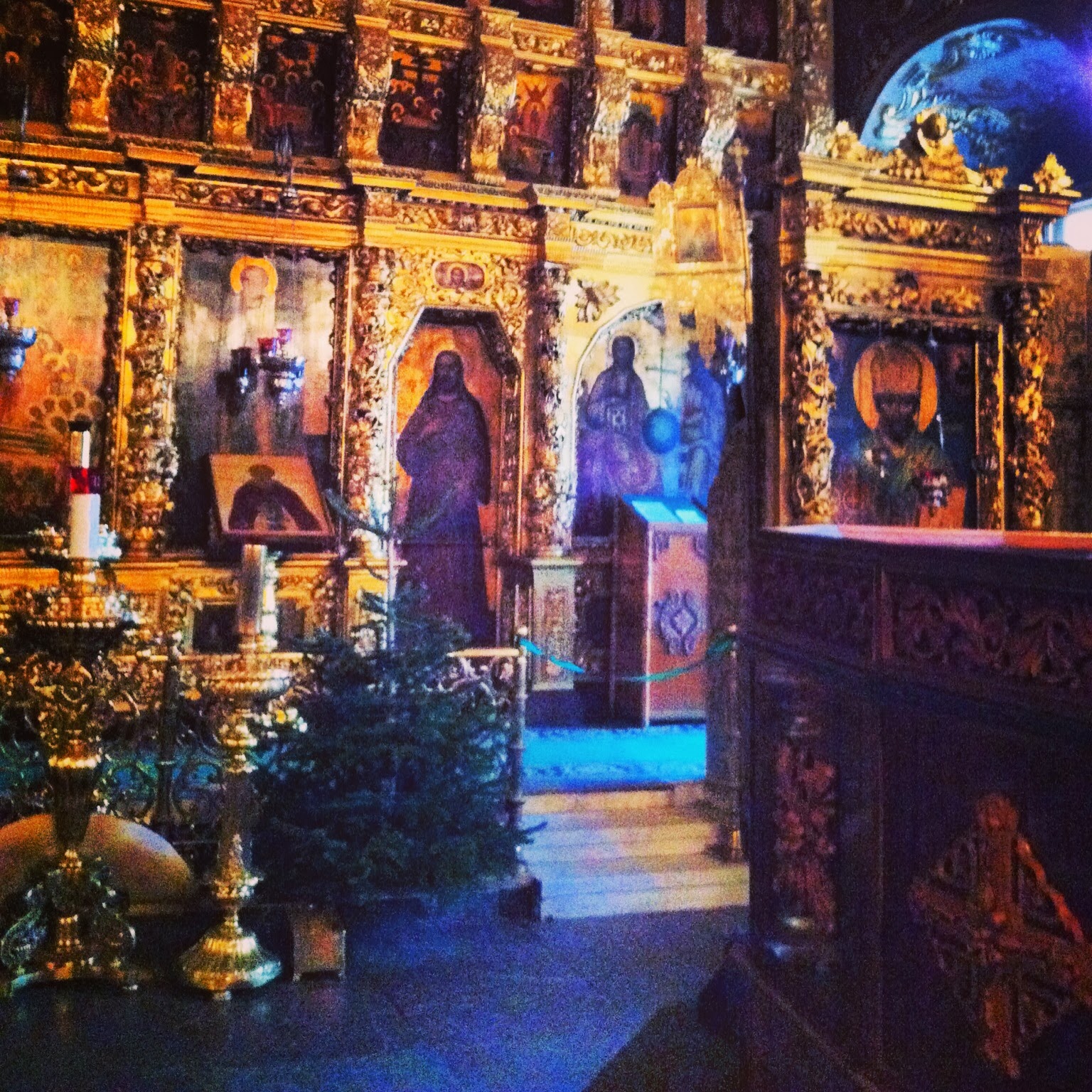
The monastery was beautiful, especially in the snow and a little bit of sun that graced us with its presence. Professor Sherman arranged for an English speaking guide to teach us more about what we were seeing. We saw the church where Ivan the Terrible had been baptized, and the areas where the current monks still live today. We were able to enter some of the chapels and buildings with her, where she taught us more about church traditions and iconography. In Russian Orthodoxy, it is not allowed to adorn churches with figures and statues representing holy figures, so instead they have developed a rich tradition of paintings and icons to decorate the church with. Icons are pictures of saints, identified by the golden circle behind their heads, in front of which people pray to for help and guidance. Icons, along with the exotic smell of incense, are the two main characteristics of Russian Orthodox churches. It is also respectful for women to cover their heads with scarves while in a church or monastery. 
Some of the painted icons inside one of the monastery's churches. 
The best wooden toy models in the land. 
It’s always interesting to me to note the differences between Eastern and Western Christianity, as both still follow the same teachings and stories from the Bible, yet they have observed different protocol and traditions ever since the Great Schism of 1054 in Constantinople. Another example of a deviation from Catholicism is the absence of pews or seats in Russian Orthodox churches. Those who are unable to stand through an entire service may stand, but generally they stand, as they believe they will be closer to God throughout worship. As always, I appreciated the opportunity to learn such things firsthand, and we all enjoyed our day together at the monastery very much. We were also approached by a woman as we were leaving Sergiev Ploschad who wanted us to hold some little painted wooden toys she had, then take our picture with them in front of the monastery. We humored her, without really understanding why she was asking us. Perhaps our faces will be plastered all over billboards someday? You never know.

The next weekend was an even bigger adventure. After a week of teaching and researching, respectively, Professor Sherman had organized for me, Natasha, and herself to go on a weekend trip to Tula, a city about 2 hours outside of Moscow by train. We would spend the first day at Yasnaya Polyana to visit Count Leo Tolstoy’s estate and house, then the next day venture further to Kulikovo Polya, the site of the famous medieval Battle of Kulikovo.

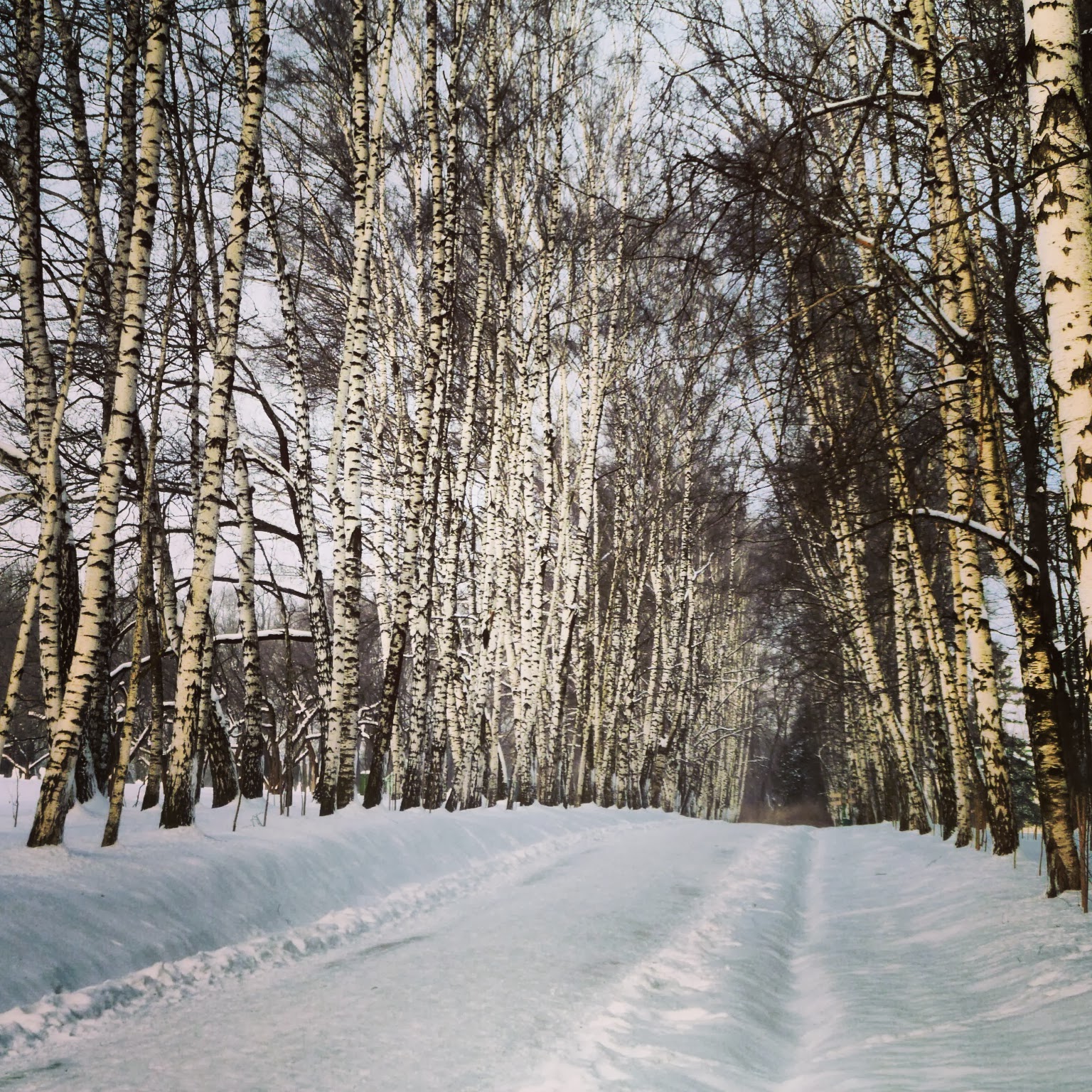
The birch-lined path leading up to Tolstoy's house. 
Our day at Yasnaya Polyana was very inspiring. We learned a lot about Tolstoy and his impressive life, which not only included his writing prowess, but also his intense desire for learning and knowledge. He mastered well over six languages, and achieved reading competency in about fifteen languages by the time of his death, and he usually spent about five hours a day reading books and working in his study. His estate has miraculously survived the Soviet period, thanks to an approval from Stalin himself to preserve the land, as well as survived the German invasion, as they used his house briefly for their headquarters instead of destroying it. The original furniture and belongings were sent to Siberia for protection, and upon their return they have been replaced as close to reality as possible, using old photographs and evidence. It was almost eerie to see a picture of Tolstoy sitting at his study, then to look directly in front of you and see the exact place he sat. There were no pictures allowed inside, sorry I can't show you. You'll just have to add it to the itinerary when you come visit me. 
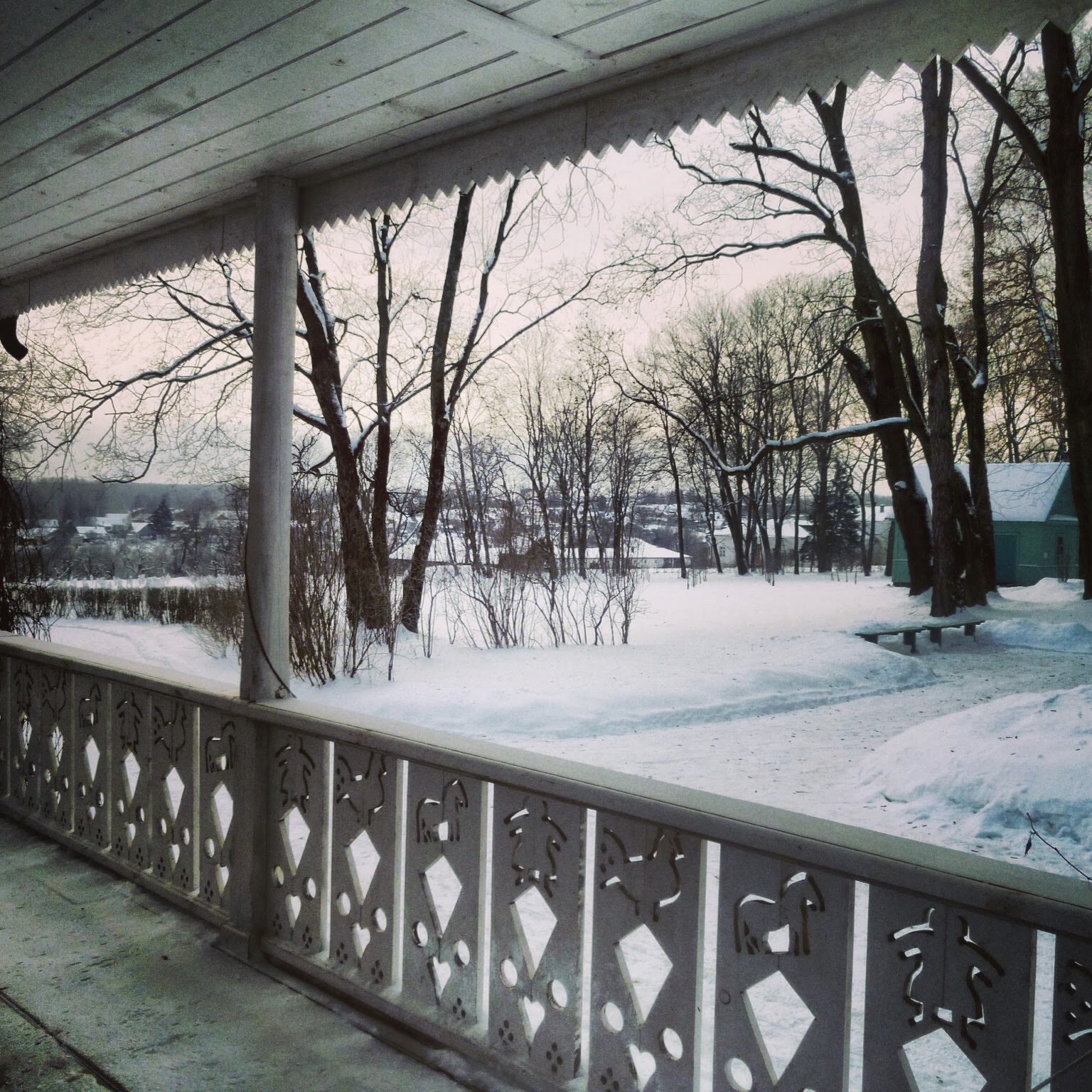
View from Tolstoy's balcony. 
A glimpse of the village on Tolstoy's estate. 
Yasnaya Polyana is also a small village, where Tolstoy’s workers and serfs lived while working on the estate. However, Tolstoy was vehemently opposed to the concept of serfdom, and believed that all men should be free. (Yet, characteristic of his contradictory nature, he also had about 350 serfs at Yasnaya Polyana.) His trips to Western Europe, especially France in the mid 19th century, had a profound effect on him as he learned more about events such as the French revolution. He returned to Russia and set up a free children’s school for his serfs’ children, where he himself was a teacher for some time, and continued to establish schools throughout his life in the region. He was born into privilege but did not let it affect him as it could have. He loved nature, riding his horses, entertaining, and of course, his studies. Throughout his later life, he was so outspoken and objective against the Russian Orthodox Church that he was excommunicated, therefore buried not in a church cemetery, but out in the woods near his house. It was a fantastic to learn more about this great man while walking on the same grounds he must have set foot on over a century ago.
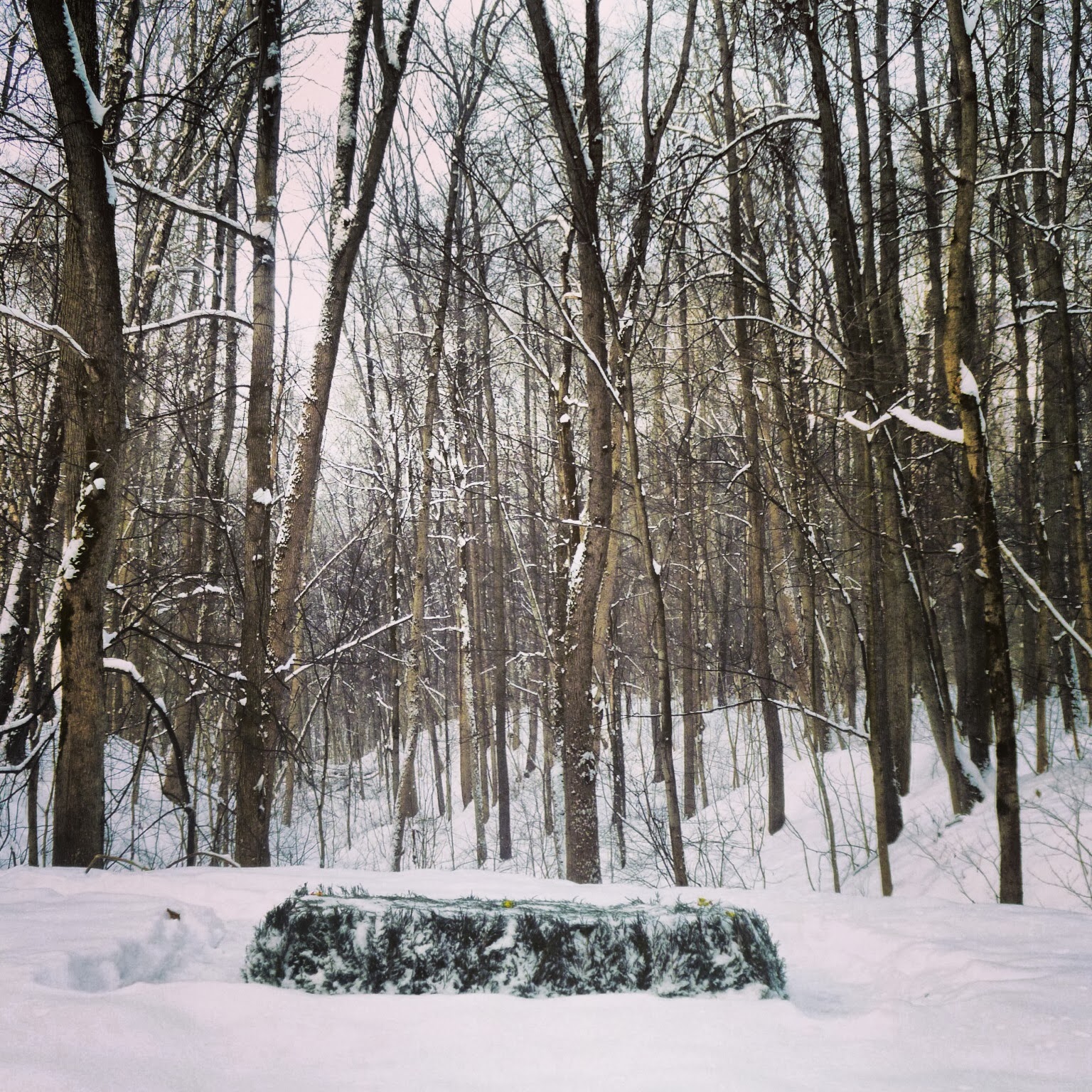
Marking the grave of Leo Tolstoy, buried in the woods he loved so much.

After a chilly day of walking around the estate we enjoyed a warm, hearty Russian meal and an early bedtime in preparation for the next day. In the morning, after we woke up and had our Russian breakfast – I had blini, which are a crepe-like pancake, and Natasha and Professor Sherman had kasha, which is an oatmeal-like dish made with buckwheat and milk – we were met by Sergei, our guide, and Olga, our translator. Sergei is an archaeologist who has worked on dig sites at Kulikovo Field, and currently works at the local museum in Tula. Olga is a history student studying at the university in Tula who also works as a freelance English translator. So yes, as you may have realized, now we had a whole car full of history nerds. We know how to stick together.

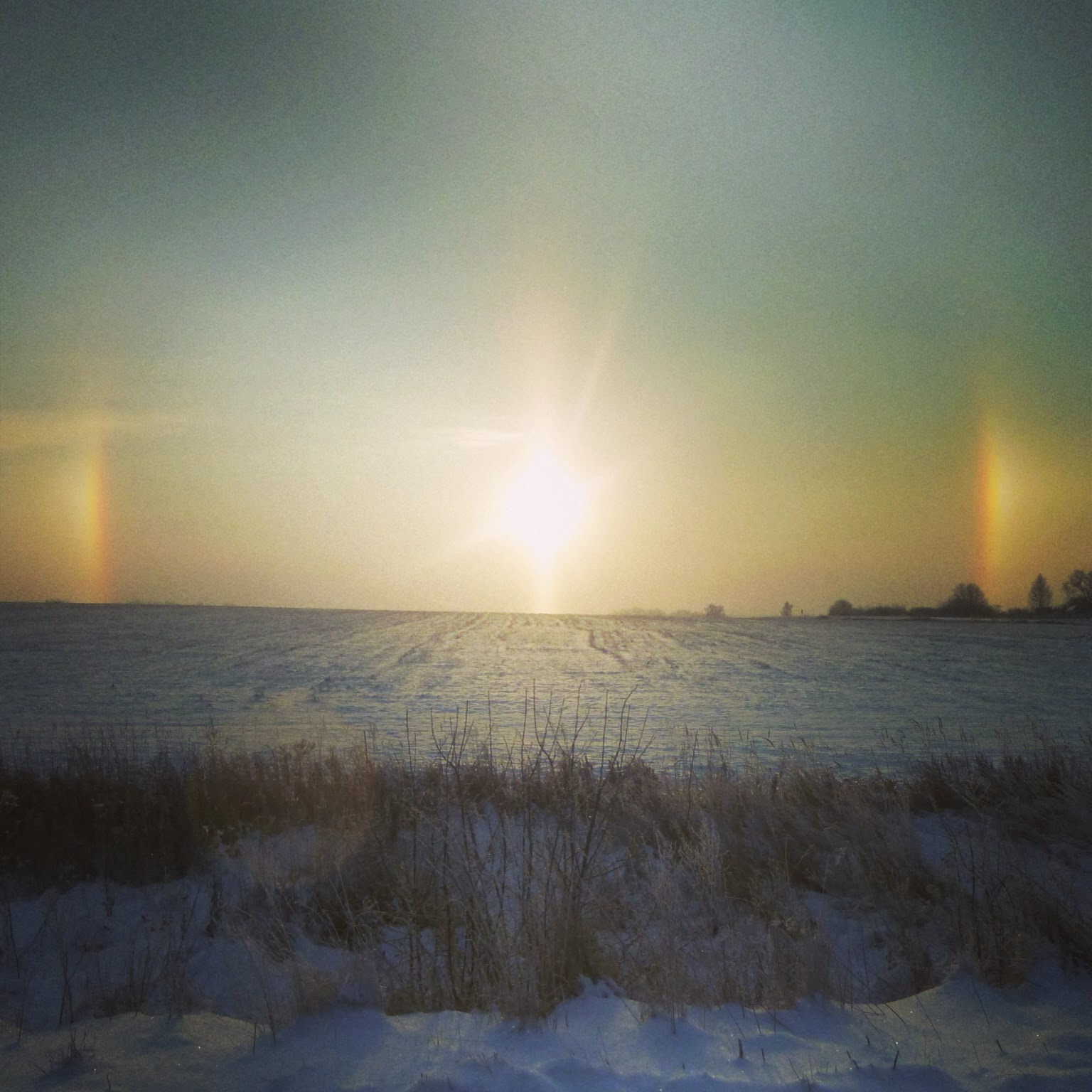
Our excursion for the day would take us beyond Tula, across the forest region, and all the way to the Lower Don River and the edge of the Russian steppe. It was one of the coldest days in Russia I had experienced thus far, with the snow so crisp it crunched underneath our boots. It was a stunningly beautiful winter day, and as we began our drive we were treated with a ‘snow dog,’ or ‘phantom sun.’ It was so impressive that Sergei pulled over so that we could take pictures. Upon doing more research (thanks Wikipedia) I learned that sun dogs are most commonly created from the refraction of light from ice crystals, especially in very cold weather, when these crystals “drift in the air at low levels.” Either way, it was cool. We considered it a good omen for the day.
Our first stop of the day was at a cute little ethnological museum in the tiny village of Epiphan. We toured a former merchant's two story wooden house, learning about traditional Russian ways of life and admiring the well preserved furniture and nineteenth century objects. Then were treated to snacks and tea from a traditional samovar, which is what Russians traditionally used to boil water for tea and cooking. Today there are electric samovars, but the most authentic ones still use coal or other sources of fire to heat the water from the inside. Here we are enjoying our tea with Olga 1 (our translator) and Olga 2 (standing) , our guide at the Epiphan museum. 


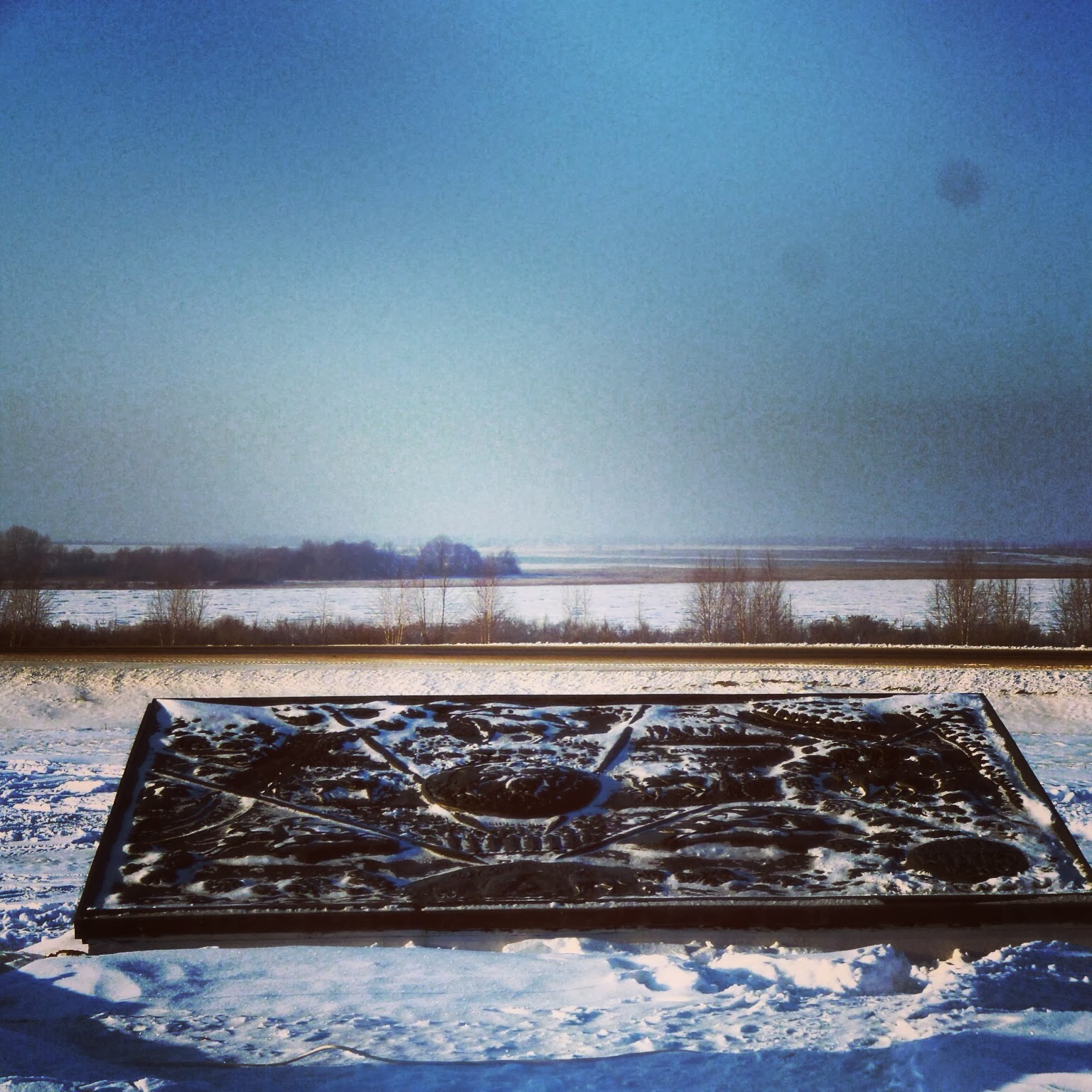
The next stop was Kulikovo Polya, or Kulikovo Field. During the drive Sergei and Olga took us back to the times of medieval Russia – think 10th or 11th century – when there were nothing but tribes living on the lands we were driving over. We were in the region where the forest met the Steppe, a flat southern lowland that extended hundreds of kilometers across Russia. The Slavic tribes from the south west intermingled with the Baltic tribes from the west, but soon on their way were the Mongol and Tartar tribes, from the east. Sergei explained how the Mongols had been working their way west as fierce warriors in the 12th and 13th centuries, establishing a kingdom known as the Golden Horde in the southeastern region of Europe. Though there were many battles and skirmishes, a serious conflict ensued in the late 14th century, as the Mongols sought to take advantage of the unstable tribal lands in the north, and soon word came that a Mongol army, led by Mamai, was on its way towards Moscow. They headed north, camped out at the edge of the Steppe and the bank of the Don River, and waited. My captions have suddenly decided not to work, so the picture below is the shadow of Professor Sherman and I standing and looking out over the frozen Don River. The Don is one of the most important rivers in Russia, where some of the earliest evidence of life in Russia has been found.  

On the opposing side, Prince Dimitry Donskoi of Moscow, gathered his forces. The army of Moscow “was joined by armies from most of other Russian principalities, including Tver, Suzdal, Rostov, Yaroslavl, Polotsk, Murom and Beloozero.” Prince Dimitry went to St. Sergius (yes, the same St. Sergius from the previous weekend) for a blessing before the battle. He and the army were blessed, then they rode out and crossed the Don to meet the Mongols. Below: Prince Dimitry receiving the blessing. 


As this point, we were at the museum of the Kulikovo Battle. After admiring archaeologica relics from the battlefield (one relic was even found by Sergei himself) and reconstructions of armor and decor, we ended up in front of a model of the battlefield. Sergei knew his stuff so well that he diagrammed the battle for us using his hands. The entire battle didn’t last much longer than three hours, but it manifested the skill and technique Prince Dimitry and his men had employed, resulting in a victory for Russia. Moscow was saved.

Today, there are many monuments and churches in the area to honor the battle. For our final stop, Sergei took us to a memorial hill from where the Mamai, the Mongol leader, supposedly watched the battle, and where a church dedicated to St. Sergius stands today. After the whole day of learning about it, we could finally view the battle site. It was incredible to me how much the archaeologists have learned and pieced together about the battle, despite it taking place over seven hundred years ago. 


At this point, it was late afternoon and about 10 degrees below zero. We had our moment of silence and respect for the battlefield, then quickly walked our way back to warmth. We returned to Tula and thanked Sergei and Olga for the incredible day, then had a fast dinner before boarding the train home. It had been a great weekend, with Monday coming far too quickly. I was still processing all I had learned and seen the past two days, but I was so grateful for the opportunity to relive the past and understand more about Russia.

Another week passed, and the night before Professor Sherman and Natasha were due to leave I invited them to visit my school. They came and met some of my students, then after coming to my apartment to meet Bazarov the Kitty, we had dinner and said goodbye. It had been such a treat to see and learn more about Russia with them. They both made it back safely and are beginning their respective semesters at school now. As for me, I’m back in action with only four months left of teaching. Every time I learn something new about Russia I’m more intrigued with their rich culture and history, despite the horrors of the 20th century. We’re all looking forward to watching the Olympics, which unfortunately I will not be able to attend due to the cost and the distance away from Moscow – I’ll be enjoying it just as much from here though, and still cheering for America, of course. We're all praying for a safe and peaceful Olympic Games, so that we can simply focus on the unity of the countries of the world and enjoy watching the best of the best compete for gold. That is what the Olympics is all about, after all, isn't it?    


Best wishes for a great February – take care everybody, and don’t forget about Russia if you’re longing for that warm winter getaway. As you can see, there is an endless amount to do and learn here, and I only have a few more months to take advantage of this intriguing country.