Tuesday, January 5, 2016

Flashback Series: Back to the Roots (Norwegian Edition)

Back to the Roots: Norwegian Edition
June 2014

As an American from the northern Midwest, whose blood is over half Norwegian, and who still has living relatives in Norway, I had always known I would pay the country of my origins a visit. I know about as much Norwegian as fits on the table prayer wall hanging we have at Christmastime, and I have way too many freckles (thanks Irish ancestors), but I’m also six feet tall, have a Minnesotan accent, and say “ooffda” on occasion.
 Dead giveaway. They are my people.

Growing up in Minnesota and retaining the traditions my mom grew up with exposed me to a little bit of Norwegian culture. We make lefse for holidays, my mom goes to every lutefisk dinner she can find at pretty much all the Lutheran churches in Southern Minnesota, and like every good Minnesotan, I have an arsenal of Ole and Lena jokes up my sleeve. So, I was very much looking forward to visiting the land where it all came from.

3:05 PM. I still have the time marked in my journal when I officially cross from Sweden to Norway. The landscape didn’t change at all, but I’d like to think everything became a little greener, the air became a little crisper, and the feeling of heritage intensified a little more. I was finally in Norway.

Oslo

I arrived at the main train station, which is where I had to leave from that evening, so with most of my things in a storage locker in the train station (which always makes me nervous, but I’ve never had a problem yet), I headed off to explore. I must admit, I was surprised at Oslo. Coming from Stockholm and anticipating another city built up on the water, my expectations were high for some picturesque views, but the city I was greeted with instead was on a different level. Where Stockholm had charm and dramatic beauty, Oslo was more elusive with what it had to offer, yet it did offer it own charm, in a more sophisticated way. As I look back to my journal for more memories, I’ll write my description from that day: “It’s definitely not as aesthetically pleasing as Stockholm, but it’s still got a classy kind of ‘badassery’ to it – it knows it’s not the best looking, but it’s going to be awesome anyway.”

Oslo Opera House
View from the Opera House
Directly across from the train station is the Oslo Opera House, a magnificent, curious structure that is said to resemble a glacier, or a ship, and has interconnecting flat panels to make up the roof, on which walking is encouraged. Turns out napping on the roof is allowed also, which I took advantage of later in the day. But first, I had a whole city to explore.

Fortress
From the Opera House I walked through some of the downtown district and discovered delightful little cafes and restaurants hidden among the stark buildings. I reached the edge of the water on the other side of the Opera House, upon which a large, old, fortress was built. I was so sure I would have to pay an entrance fee, but I was able to wander around to my heart’s desire. I climbed up on the old, stone walls for the views and looked at the harbor not too far away from me. There was a cute little visitors center I was able to enter where I learned that the Danish monarch had ruled Norway for a good 2-300 years, and King Christian had visited Oslo often, and was actually fairly benevolent for the people of Norway. After the Norwegians became independent the fortress was also used as a prison and used during WWII.

Royal Palace
Nobel Peace Center
Next was walking to the harbor area – home to the Nobel Peace Center (which cost about 40 dollars to enter, so I skipped that…) and the large government buildings and plaza center. I could have wandered around there for some time, but I had only one goal and destination in mind for Oslo: The Viking Ship Museum. Now, most people would probably have chosen to find some sort of transportation for themselves to get to the museum, and looking back I really should have too, but I was set and determined to walk my way over there – Google Maps has just revealed to me that it was a 3 mile walk there and back. No wonder I was in so much pain by the end. However, the route I chose was worth it to walk through some more of the trendy neighborhoods and by the Royal Park and the beautiful Royal Palace.

Viking Ship Museum
Finally, I reached my destination: The Viking Ship Museum. It was very well done, and I learned quite a bit about the ships that had been very impressively fully excavated. I didn’t know they used to use ships for burials, but some of the artifacts they had uncovered were wonderful to look at. It was worth the walk to see the real Viking ships, that my heritage really and truly is connected to the Vikings. (Not that I want to be related to brutal pillagers, but I'd rather know they were real than a fabrication or myth.)

After my equally long walk back to the train station, with grocery store food in tow for my evening train ride, since buying anything in Norway will cost you at least $5 (like a bottle of pop), I decided to take a nap. I went back to the Opera House and stretched out in the setting sun. When I woke up it was a little too late to start trekking again, and I was quite tired, so I parked myself at a café in the train station and waited for my night train at 11:30 PM.

Midnight Sun
Naturally, one would think I would have slept the night away peacefully after all of my walking and being on a sleeper train. But this was not the case, due to two things. One: mid-June was just before the summer solstice, which happens to be an all night sunshine event in Norway, therefore the sun never quite actually set that night. Two: The train ride from Oslo to Bergen, listed as one of the most scenic train journeys in the world, was just too beautiful to ignore. So, I tried to make myself sleep but just kept waking up, shoving on my glasses, and trying to take pictures as I gazed out at the terrain, which changed from flat and tall forests to foothills to snowcapped mountains and valleys. I arrived not rested but satisfied and glad I had been able to see part of such a terrific route. Next time I’ll have to try it during the day!

Bergen

Bergen was a special place for me, as I was finally able to meet Gerd, my great-grandma Ida’s cousin. My mother had visited her when she was traveling in her twenties, and now, after many years of Christmas cards and e-mail exchanges, our meeting was finally upon us. She had her niece, Karen, come to meet me at the initial train station (I’m sure I smelled lovely) and then she took me to the next bus station and put me on a local bus to Gerd’s. Gerd and I had arranged to meet at the small bus station in the town of Kvarnik, and when she began walking up to me I knew it was her. Taller than I had expected, and still speaking English with a distinct New York accent, Gerd was sharp, snappy, and wonderfully entertaining. She had lived in New York for nearly twenty years, and still had that attitude about her, which was quite a different impression than what I had envisioned about the elderly lady who had knitted us sweaters when we were young. It was fantastic. 
Gerd and me getting blown over

She walked me around her little town and let me rest at home, as I was running on fumes from my overnight yet not restful train ride. After a lovely nap, I woke up to, as you might imagine, some lovely food. We chatted, got acquainted, then went out on some walking errands. That evening we relaxed, with plans to take the bus the next morning over the series of bridges that connected the coastal towns to Bergen – she said until recently most people would just take the ferries into work before they built the bridges. I learned that in the past, boats were used as a normal part of everyday travel through much of Norway, thanks to the large coastline and fjords.
Downtown Bergen

As it turns out, Bergen was the beautiful, picturesque, stunning Norwegian port city I had been imagining. The colored houses contrasting with the blue water and greenery made for a delightful view. She took me for a walk around the downtown harbor, and pointed out places where she used to work, memories from her childhood, and how things have changed. We rode the funicular to reach the top of a Lookout, also a popular hiking destination, but the wind was too bad to enjoy a hike. Instead, we enjoyed the views and looked around at the little shops. She treated me to a delicious fish stew in Bergen, and said that a large part of the Norwegian diet revolves around fish. No complaints about that on my end! 


View of Bergen from Lookout
The Fjords

The girl who had met me at the train station, Karen, had told me that they had arranged for me to go along with her and her French boyfriend Xavier on a trip to buy a horse from one of the fjord towns about six hours away. They were going to take me along to show me more of the country, since they had to do the drive anyway, and it turns out it was probably the highlight of the trip for me.

Great Grandma Ida's mother's hometown
Two days after I arrived at Gerd’s, Karen and Xavier arrived to pick me up. We left mid- morning in their vehicle and an empty horse trailer, with a route that would wind us through the mountains and along the fjord coastline, with a ferry crossing to reach our final destination. It was about a 5 hour trip, but we made some stops along the way to eat and stretch our legs. First, we stopped in Evanger, where Gerd had instructed us to stop, as it was where my great-grandma Ida’s mother had been born. It was a beautiful, quaint little town in the mountains with a small lake nearby. We took a picture for posterity.

Lunch picnic in Voss, Norway
Our next stop along the way was Voss, a popular location for adventure sport enthusiasts, and the host of many international competitions for winter sports. We had a lovely picnic and relaxed by the lake. It was June in Norway but still a little chilly in the mountains, as to be expected. We also stopped by the Sognefjord, the longest fjord in the world and very popular with tourists, just to see it, before we continues on our journey in a different direction. By the way, I learned, and will share for clarification, that the actual definition for a fjord is: “a long, narrow inlet with steep sides or cliffs, created by glacial erosion.” (Wikipedia). Basically, it’s a water road in place of a valley. It’s larger than a river and has steeper sides than a river. They’re another example of how Norwegians traditionally (and still do) used boats to travel and get around instead of any other form of transportation. We took a water ferry to cross to the road we needed to and continued on our way, stopping for dinner in Sogndal (which we ate while watching one of the World Cup games, a nice accompaniment to my travels that summer), reaching our destination at dusk. Our hosts, the horse sellers, spoke English well and chatted with us before putting us to bed.
View from breakfast

Karen and her new horse
We slept soundly that night, and awoke to one of the most beautiful views I had ever seen. After a delicious fresh breakfast, we sat and enjoyed the view before preparing the horse for his journey (I can’t remember the horse’s name, or I’d tell you). 

Lustrafjord, Norway
Historical first stave church in Norway
Coffee and Lefse at the Walaker Hotel
Our drive back was just as scenic, though they purposely chose a smoother route for the horse’s sake and to change the views for me. We stopped to see the views and to look at the oldest Stave church in Norway, called Urres Church. After that, we crossed on the ferry and then stopped at a place called Solvorn, which has beautiful views and is home to the Walaker Hotel, established in 1640. It was said to have some of the best lefse in Norway, so of course I had to try it. (Don’t tell anyone – but I think I prefer my grandma’s). We brought the horse to her home and I am happy to report he fit right in with Karen’s other horses. I returned to Gerd’s with a camera full of pictures and stories to tell her. It was one of my last nights in Bergen, and we ended staying up way too late to watch one of the World Cup games together, which was fun and one of those evenings I’ll always remember fondly. It was also the evening of the solstice, which proved to be a beautiful sunset, for as much as the sun would set that night, anyway. 

Summer Solstice in Norway
Isdalsto, Norway 
Gerd, Cherstie, and her children at the farm 
The last day in Norway was for me to visit the other family I had remembered hearing about while growing up: Gerd’s other niece Cherstie. My mom had remembered her and her sister Karen when they were small girls, and more recently when she went back to visit a few years ago. Cherstie has three children now, and they all live on the farm that used to belong to Gerd’s father in Isdalsto. Gerd’s last name, Isdal, represents where she came from, and today she doesn’t live very far from where she grew up. It was special to finally see the place I had grown up wondering about. We had a lovely lunch with Cherstie’s family, and she showed me around a little. She is a very talented illustrator, and was kind enough to send me home with some children’s books she had illustrated. They’re in Norwegian, of course, but hey, maybe I’ll learn someday. ;-) 

And with that, it was time for me to head to the airport. I had an evening flight but with a long layover in Copenhagen, so after an airport sleep I ventured out to explore a taste of Denmark. Here's a short entry from Copenhagen:

Bonus Day: Copenhagen

Morning coffee in Nyhavn.
I remember in grade school that we had to read the young adult book Number the Stars by Lois Lowry. The book became one of my favorites and I read it over and over again. Set in World War II, the story is about a young girl and her family living in Copenhagen at the time of the German occupation. Her older siblings are members of the Resistance, and her Jewish best friend and family must escape for safety. Told from the perspective of a middle school girl, the story focuses on the brave fishermen who smuggled Jews safely out of Copenhagen and took them to neutral Sweden.

The Little Mermaid
Central downtown
Though it’s been many years since I’ve read it, I still remember the details of the book describing Copenhagen like it was yesterday. I knew I had to see Tivoli Gardens, the statue of the Little Mermaid, and the coastline in order to get a taste of Copenhagen, but I wasn’t prepared for how beautiful the city would actually be. I ended up wandering for hours on end during my ten hour layover, and look forward to revisiting the city to do it justice. Here are just a few photos to give you a taste of this magical city.
Tivoli Gardens
Not sure what this is but it's beautiful!


Next is the return of my friend Chelsea for the second stage of my European summer adventure: 
Eurotrip 2014!


Flashback Series: Back to the Roots (Swedish Edition)

Back to the Roots: Swedish Edition
June 2014

I arranged my trip across Scandinavia by boat and train – after traveling with Mom and Brent through Moscow, St. Petersburg, the Baltics, and ending our time together in Finland, I ventured out on my own once again,  starting with an overnight ferry from Helsinki to Stockholm.

As a bonus, it turned out I was able to visit the place of a very small percentage of my DNA’s heritage in Sweden – I think the story is “we’re pretty sure you’re a little bit Swedish but we’re not exactly sure how much and from who…” Either way, my stepdad Brent is fully Swedish, and he also has some living relatives in Sweden whom he was kind enough to provide contact information for. Brent and my mother visited his second cousins Goran and Lena a few years ago, and when I contacted them to let the know I’d be traveling in Sweden, they were more than happy to invite me down to their home for a few days in Jonkoping, with an added bonus trip to the island of Visingso.

Uppsala

I arrived in Stockholm, Sweden by overnight ferry (on which I felt a little like Leonardo DiCaprio in Titanic, staying down in the hold…under the car garage but it hey, it was cheap). From there, I immediately headed north to Uppsala, Sweden, where I had lucked out with a free place to stay. One of my friends from the UWGB swim team was then (and still is) living in Sweden with his girlfriend, whom he had met on a study abroad trip. When I contacted him to meet up, we were thrilled, but then unfortunately he had to go back to the States just before I arrived due to a family event. However, he was still happy to leave the keys with a friend and allow me to stay in their apartment. After two weeks of saying goodbyes and traveling nonstop, I was ready for some peace and quiet and embraced the opportunity to stay on my own for free.

Uppsala Cathedral
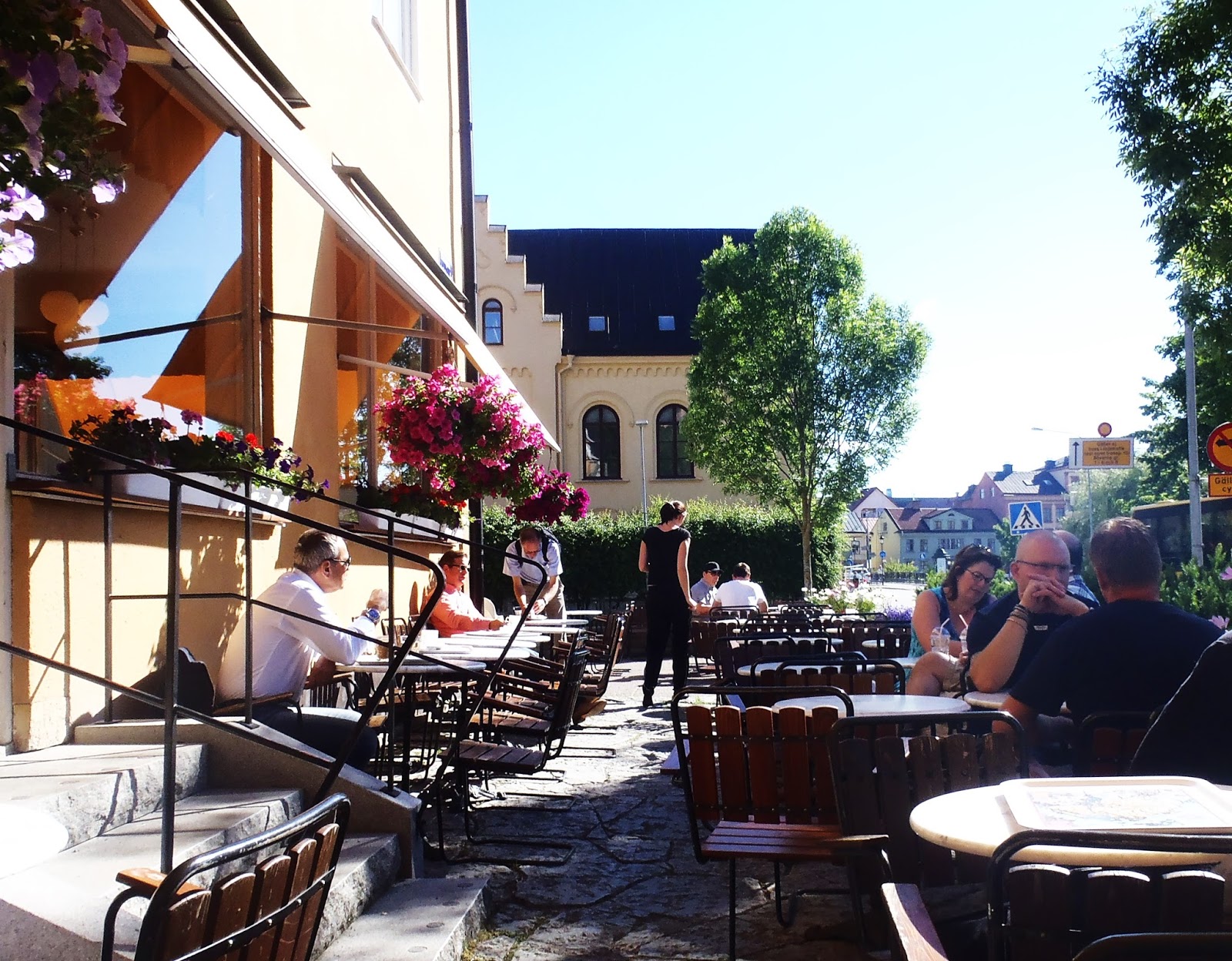
Uppsala is very historically a university town, with the founding of the first university in Scandinavia taking place there in 1477. The fourth largest city in Sweden, it remains a high seat of academia and religion, with the seat of the Archbishop of the Church of Sweden based in the Uppsala Cathedral. However, it doesn’t seem like that big of a city as it is very walkable and pleasant to get around, with friendly people and a small amount of traffic everywhere. I spent most of my time there reading, walking, taking pictures, and enjoying Swedish coffee, which was delightfully strong and flavorful.

My favorite coffee shop
I lucked out finding a coffee shop in the central downtown, with a lovely view of a fountain and some of the university grounds. I remember sitting and enjoying the outdoors, when all of a sudden the chairs next to me began to be occupied by a few elderly gentlemen. They looked at me, tried to communicate with me, then laughed and joked to themselves as it became clear that neither of us knew the other’s language. One of them gave up and took the chair on the opposite side of me, then kindly offered me some of his tobacco. I soon realized that these gentlemen were regulars of the coffee shop, and I had very boldly taken their seats. Oops. At least they were friendly about it.

Delightful little city
My friend, who had left the keys for me with his Swedish teacher, was both teaching English and taking Swedish classes at a language institute in Uppsala. As I contacted her to get the keys, we met and chatted for a bit, and she invited me to come to a Swedish class she was teaching the following evening. I took her up on the offer, and, although I was seated in the advanced class, received some one on one lessons while the rest of the class worked on writing an essay. I learned the alphabet, how to say my name and introduce myself, and how to count. I took this basic knowledge with me throughout my travels in Scandinavia and learned just how similar some of the languages are.  I also learned I am terrible at Swedish pronunciation, but like everything I’m sure it takes practice.

Swedish graduation
On my last morning in Uppsala, sitting at my usual coffee shop, I suddenly noticed some young people dressed in all white, with sailor caps on. I was curious, as there was no apparent Swedish Navy nearby, nor would that make sense to have a Navy in the middle of the country. As I kept observing, more and more young people were walking in the same direction, some on motorbikes and some with parents. I believe I ended up asking the girl at the front counter, who spoke English wonderfully, and she informed me that it was high school graduation day, and Swedish students traditionally wear white and sailor caps instead of our gowns and caps. As I walked myself along the castle walls up the hill later that day, I realized I had stumbled upon the location of the graduation ceremony. It was an interesting cultural perspective, and it suited my short time in Uppsala, which was all about enjoying myself and beginning to learn about Sweden and its people. Uppsala was a lovely stop for me with a great opportunity to relax and recharge my batteries before the next leg of my trip. 

Stockholm

Views of Stockholm
 I spent two days in Stockholm on my own once I arrived on the short train from Uppsala that afternoon. After spending a longer time than anticipated figuring my way around with the trains, I finally made it to my hostel in the Södermalm district of the city. If you’re familiar with the “Girl with the Dragon Tattoo” stories, this is the area where most of the story takes place. As with most cities, it was within walking distance to a major train station, but considering it was the middle of June, I planned to walk the streets of Stockholm as much as possible.

A city on the water
My first impression was one of dramatic beauty. The city of Stockholm is made up of about fourteen islands, connected by bridges and roads, creating a little network of crossing paths and floating islands. The water was a stunning blue, with a sharp contrast of neat, colored buildings and stark white boats with their sails docked along the various pathways. The historical city center island, Gamla Stan, was a delightful mess of twisting cobblestone streets, tourist shops and restaurants, and historical sites.

People in Stockholm (most of Sweden, actually) are fit. They don’t mess around with exercise. Many of them bike to work in the warmer months, they go for frequent jogs, and they walk all over the place. There are ‘cycle paths’ (not psychopaths, Mama Kim) on nearly every sidewalk, and to me it was refreshing to see a city full of people taking advantage of their own two feet to get them around places.

High School Graduation: Stockholm style
In Stockholm I mostly spent my time walking, going to a museum or two, and taking pictures along the water. I also happened to be there during high school graduation week, which in Stockholm means your graduating class rents out an open backed truck, gathers some speakers and adult beverages, and drives around the city streets blasting party music, cheering at everyone you drive past, and probably having the best time imaginable. I was the recipient of some of these cheers, but I definitely know how they felt, so reciprocated quite happily.

Stockholm Old Town
Fun fact: When you go to Sweden, and someone greets you at a coffee counter with “Hey!,” it is quite appropriate to respond with a similar “hey” back as if you’ve been best friends forever. Although the Swedish are extremely friendly people, it wasn’t until a few days in that I discovered “Hej,” pronounced like ‘hey’ is actually Swedish for hello. So either way, it is a pleasant greeting, but I was a bit taken aback at first when I thought that someone everyone in Sweden knew me. A particular fond memory I have was walking into my girls only hostel room and being greeted with a chorus of “hej!” from my five roommates, who were giggling and getting ready for a night out. They were so happy and excited that I asked them what they were up to for the evening and discovered that they were headed to a One Direction concert, which apparently was a pretty big deal in Sweden. I had to leave too early in the morning to hear the feedback from them, but I’m sure they had fun.  

 Jonkoping and Visingso

Views of Lake Vattern
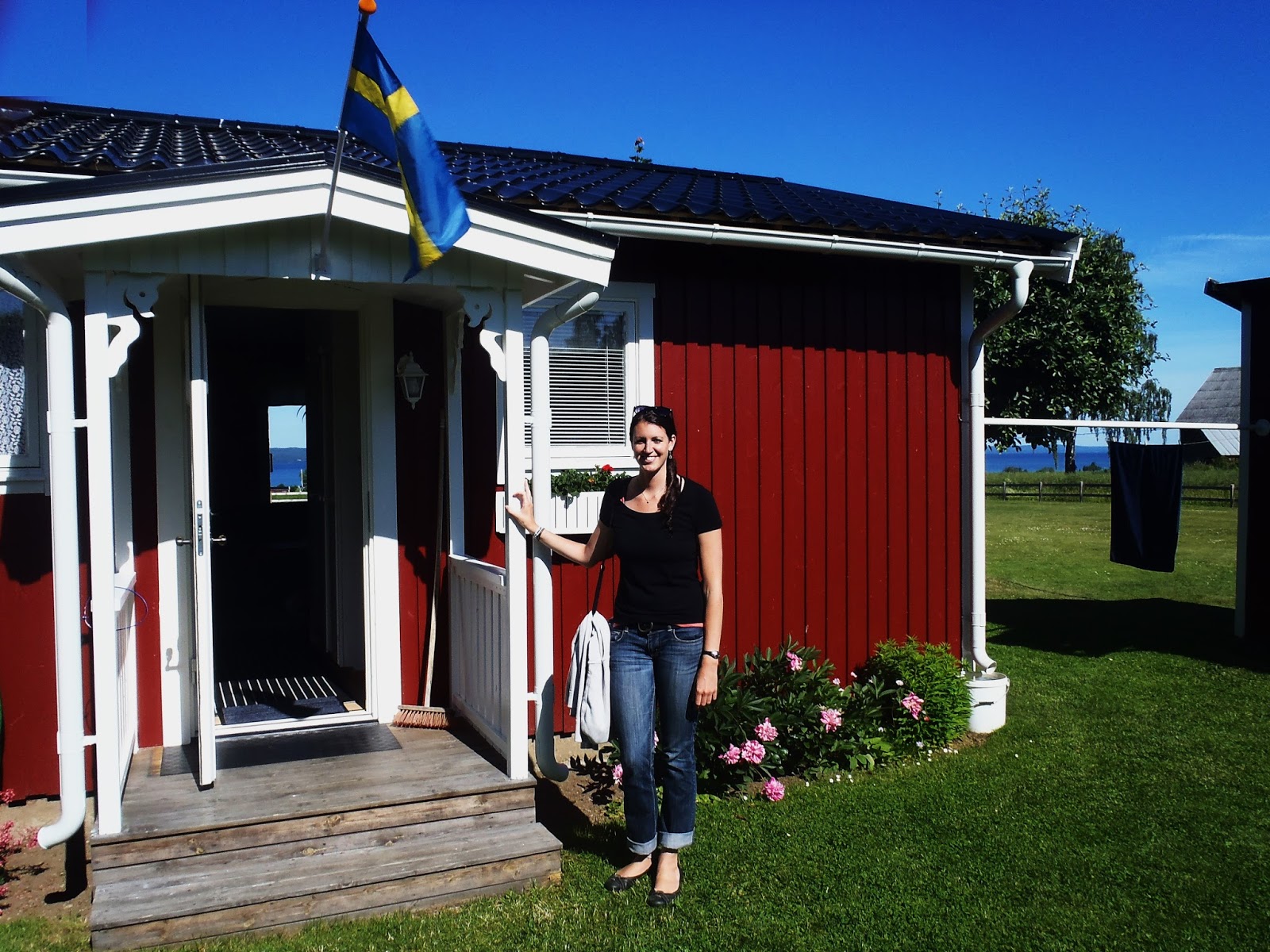
After many miles walked in Stockholm, it was time to head south. I started off bright and early to catch a series of little trains to reach my destination of Jonkoping, about three hours away from Stockholm. This is where I had Goran and Lena waiting for me with open arms, and immediately upon my arrival I was welcomed as part of the family. They lived along the shores of Lake Vattern, one of the largest in Sweden, and they had lived there much of their lives. Now with three grown children, she works as a preschool teacher and he works as a school bus driver, a recent change in career which he enjoyed. They gave me a tour of the small hills and forests around their home, treated me to a delicious fish lunch (very typical in Sweden). Next, they took me to their daughter’s house to visit and I was soon introduced to my now favorite Swedish custom: fika.
My new friend Sigge

Fika, pronounced ‘feeka’, basically translates into ‘coffee and treats time,’ the Swedish equivalent of the English teatime. It could be midmorning, midafternoon, even in the evening, but it always revolves around coffee and sweets. Also, as I mentioned before, in Sweden they drink proper brewed coffee like we are used to in the States, compared to the many espresso cultures found elsewhere in Europe. So, strong coffee plus a daily time dedicated to eating sweets equals a country high on my list.

Sunset on Visingso Island
After our fika time, which also involved meeting their then three year old and four week old grandsons, we all headed out to Visingso Island, which was about an hour’s drive away from their home. Visingso Island used to be the royal hunting grounds for the Swedish monarchy in the 12th and 13th century, and it also happens to be the childhood home of my stepfather’s grandfather, which made Lena Brent’s second cousin. Both Goran and Lena grew up on different parts of the island, then were also married in a small church on the island. They now have a cabin there which they spend many weekends at, usually with visiting children and now grandchildren. 

Family cabin on Visingso Island
Former royal hunting grounds
My wonderful hosts Goran and Lena
On Visingso I was treated to a driving tour of the island, which is only about 10 square miles, to see the historical remains from the royal family and to see the family history. My stepfather had also visited the area previously, and it was special to be able to walk in his footsteps and learn more about his roots. We also went to a family birthday party on the island, where I met a few more family members and enjoyed the sunny afternoon eating delicious food and playing yard games with the party guests. It could have been like any outdoor Saturday barbecue party in the States, surrounded by family and friends; the perfect way to end my time in Sweden. 

Afternoon birthday party

Goodbye Sweden

Next is discovering the majority of my roots: in Norway!


Flashback Series: The Grand Tour

The Grand Tour
May-June 2014

My mom and Brent arrived in Moscow just as I was about to finish my 9 month teaching contract. The weather was beautiful, and I was happy to show my city off in all its glory. My mom had visited Moscow nearly 30 years before, and she noticed how much it had changed from its Communist days. 

Inside the Kremlin
Boat trip on the Moscow River
Showing off my place of residence
Highlights of their visit include a trip to the Kremlin, walks down Arbat Street and central Moscow, and a company sponsored boat trip down the Moscow River. They visited my school, met some of my students and coworkers, met some of my friends, and toured my apartment. From there, Mom and Brent went ahead to St. Petersburg while I finished up my last day and evening at school and in Moscow. After finishing my last classes and saying goodbye, then completing our tradition of Friday night pizza and beer at the pizza place down the road, I said goodbye to my friends and roommate, (below) and Kitty, of course, and headed to the train station for my sleeper train to St. Petersburg. As I said before, Moscow was good to me, and I was a little sad to leave, yet very much looking forward to what was to come. 
Last night in Moscow - finishing it off right..
Saying goodbye to Teresa
The Hermitage 
Now my summer travels had officially begun. I made my way to Mom and Brent’s hotel (luxury, especially compared to my previous night’s train sleeper) and dropped off my things as we began our explorations. Mom had also been to St. Petersburg during her previous trip, but she hadn’t been able to visit the Hermitage Museum, a big highlight of the city. We spent most of the day there, plus ate delicious Russian food, walked around the city, and met up with Teresa, my previous St. Petersburg host – it was lovely to see her again and to introduce Mom and Brent. We also visited the Peter and Paul Fortress, the first structure built in St. Petersburg by Peter the Great, which became the “Russian Bastille” in the 19th century. This was a chilly, rainy, hungry day for us all, as you can see.
Somebody was hungry.

From St. Petersburg I finally said my goodbyes to Russia, with hopes to come back someday. Our next adventure was through the Baltic countries of Latvia, Estonia, and a stop in Helsinki, Finland. 

 Riga, Latvia

Old Town Riga
The Baltic States have changed hands several times in their history, but they remain fiercely independent and resilient. After the fall of Communism in the 1990s, these little countries have tried their best to retain culture and traditions. Our hotel had a lovely view of the capital city Riga, just across the bridge. Our days were spent walking, touring museums, eating lovely food, and even attending an organ concert at one of the churches. We also always had a supply of sweets, thanks to the shop that Brent went back to twice to stock us up on travel treats.


View of Riga
Art Nouveau
 Riga has a surprisingly impressive display of Art Nouveau buildings, built in the end of the 19th century, which were delightful to walk around and look at. We also looked at the Freedom Monument, built to commemorate their freedom from the Soviet Union, and the lovely city park just next to the monument. Poor Latvia has been though quite a history, which we learned while visiting the Museum of the Occupation. From the Soviets to the Nazis, Latvia spent many years living under someone else’s rules, but they managed to stay strong and eventually gain back independence.
City Park

After two days in Riga we boarded a bus to take us a few hours across the countryside to cross over into Estonia, which quite honestly didn’t look any different. Mom decided to mark the change by pointing out that we were now looking at “Estonian birds” as opposed to “Latvian birds,” even though they were definitely the same kind of bird. Thanks for keeping us on track Mom! 

 Tallinn, Estonia

Tallinn, Estonia
Our time in Tallinn was spent similarly to Riga, with a beautiful Old Town (one of the best preserved medieval old towns in the world) to wander around, take pictures of, visit museums in, and of course, eat delicious food in.

We learned more about the history of Tallinn at the National History museum, which was very well done and interesting. Brent and I also visited a museum that chronicled the history of the Hanseatic League, “a commercial and defensive confederation of merchant guilds and their market towns. It dominated Baltic maritime trade (c. 1400-1800) along the coast of Northern Europe.” (Wikipedia). The days of labor guilds, with merchants and apprentices and crafts evoked a sense of the medieval era that can still be felt while wandering Tallinn’s cobblestone streets.

Medieval Old Town
When in Tallinn...
However, this magical feeling was quite rudely interrupted by the sounds of Harley Davidson motorcycles and the sounds of large, drunk, motorbike men (and women) throughout our time there. We happened to be in Tallinn at the same time as some kind of motorcycle convention or tour or trip – we’re not sure exactly what, but we are sure that we would like to avoid such experiences in the future. I’m sure they were perfectly nice people, but it really did affect the charming atmosphere to have loudly drunken people roaming the streets and dominating the outdoor cafes. (Fun fact: I didn’t know it at the time, but I was to encounter the same group of people on my ferry from Helsinki to Sweden – bonus!) Thankfully, there were areas of the city we could escape and continue to enjoy in peace and quiet. Mom was after a certain kind of Baltic yarn during our trip, as well as inspect the local knitted handiwork of the local women. I made away with a pair of beautiful wool knitted mittens, which have been much appreciated in the past two winters since their purchase. 

 Helsinki, Finland

Lutheran Cathedral
Last but not least, we hopped a ferry in Tallinn in order to cross international waters to the port city of Helsinki, Finland. Finland is, interestingly, not Scandinavian nor Baltic nor Russian. It is uniquely Finnish, with an ancient language and culture. We got just a taste of the city during our two days there, but we stayed in a wonderful hotel with a full European breakfast (meat, cheese, bread, fruits, smoked fish, pastries, basically everything good in this world) that was so delicious I was delighted to be able to eat my first breakfast when it opened, sit and drink coffee all morning, and go back for round two just before it closed. It also had a sauna, which I partook in just to say I did – it wasn’t the traditional run outside and roll around in the snow type sauna, but I still enjoyed it anyway. 
Brazilian Samba...in Finland

Botanical Gardens
We walked around the city – on our first stop at the stunningly gorgeous Lutheran Cathedral we discovered there was a Brazilian samba festival happening, which was highly entertaining to watch. We also visited the nearby botanical gardens and waterfront.

Goodbye Finland!
Finland Port
Finally, it was time to say goodbye. It had been a wonderful trip with Mom and Brent, but it was time for me to travel solo again for a little while. I had plans to return to Minnesota before starting my job in New York City, so it wouldn’t be long before I saw them again. I must also give them a shout out for very kindly taking a large load of my things from living in Russia home with them – it was a kindness much appreciated, as I left Finland with a backpack and a shoulder bag, just the way I liked it. 

Next up: Adventures in Scandinavia!